Why Choose an Active Piezo Buzzer for Your Projects?
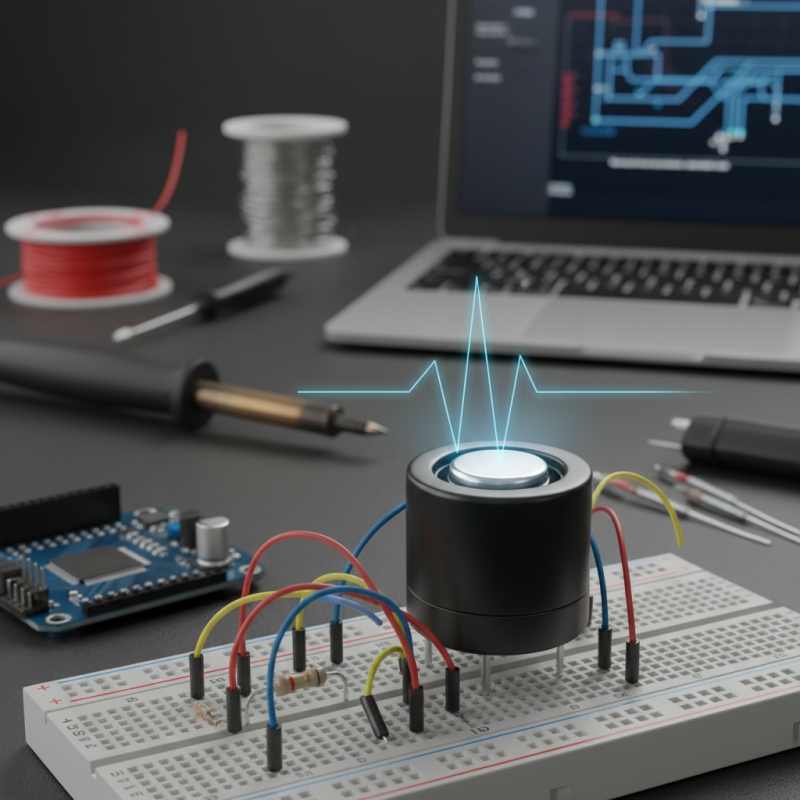
Active Piezo Buzzers are essential components for many projects. They convert electrical energy into sound, providing clear audio signals. Their compact size makes them suitable for various applications, from alarms to musical instruments.
Choosing the right sound indicator can be challenging. The Active Piezo Buzzer stands out due to its reliability and efficiency. Unlike passive buzzers, they generate sound independently, which simplifies circuit design. This feature can save time and reduce complexity. Many engineers appreciate the straightforward integration in their systems.
In some cases, designers overlook the importance of sound quality. While Active Piezo Buzzers are efficient, the tonal quality may vary. It’s worth testing different models. Understanding specifications can aid in selecting the best fit for specific applications. Embracing this knowledge can significantly enhance project outcomes.
Understanding Active Piezo Buzzers and Their Functionality
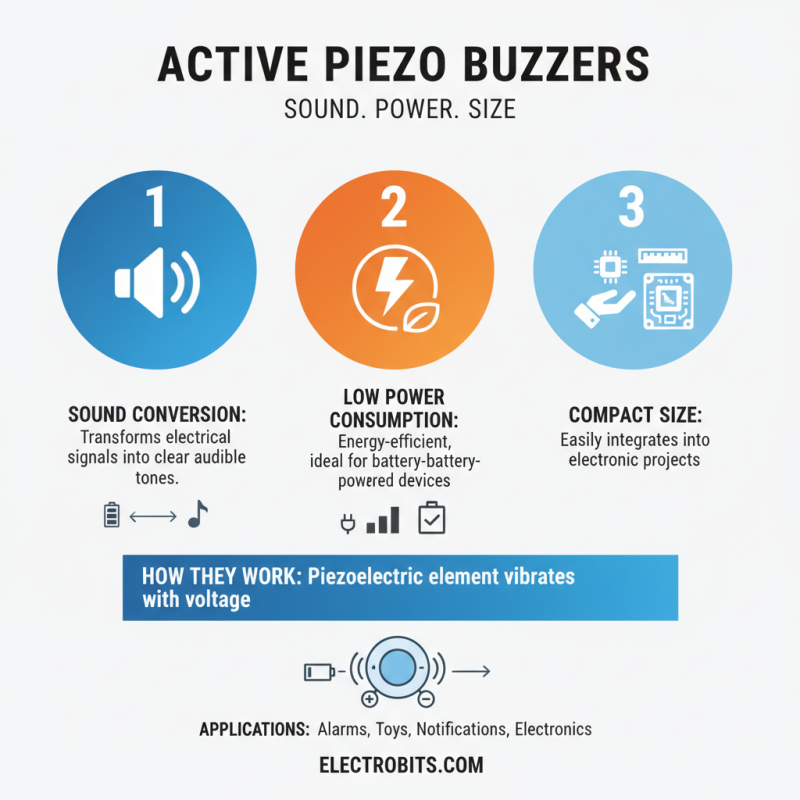
Active piezo buzzers are essential components in many electronic projects. These devices convert electrical energy into sound, making them perfect for alerts and notifications. They work by utilizing a piezoelectric element that vibrates when voltage is applied. This unique feature allows them to produce clear sound tones while consuming minimal power. Their compact size fits easily into various applications, from alarm systems to toys.
When selecting an active piezo buzzer, consider frequency and sound output. Different models produce different sound levels and tones. Testing various options may yield better results. Note that not all buzzers are suitable for every project. Some require specific voltage levels or may not be loud enough for your needs.
**Tip:** Always check the specifications before purchasing. Ensure the buzzer meets your project requirements.
It’s crucial to understand that certain passive buzzers may not provide the same robust performance as active options. Experimenting might lead to unexpected challenges, such as incompatibility with electronic circuits. Keep an open mind and be ready to adapt your designs. Overcoming these obstacles can enhance your project significantly.
**Tip:** Document your findings during testing. This way, you can refine your approach in future projects.
Benefits of Using Active Piezo Buzzers in DIY Projects
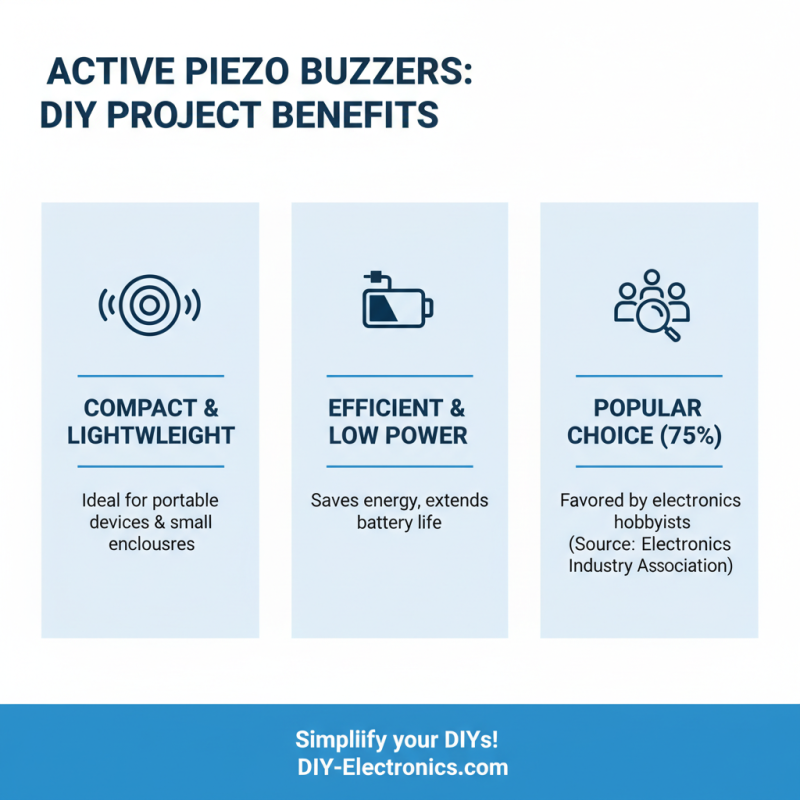
Active piezo buzzers are becoming increasingly popular in DIY projects. Their compact size and lightweight nature make them highly desirable for creators. According to a report by the Electronics Industry Association, nearly 75% of electronic hobbyists favor using active piezo buzzers due to their efficiency and low power consumption. This feature is especially beneficial when powering portable devices.
One significant advantage of using active piezo buzzers is their simplicity. These components require minimal external circuitry. This ease of use reduces complexity and saves time. Designers can focus on their projects rather than troubleshooting. However, this simplicity can be a double-edged sword. For intricate projects, the limited sound modulation capabilities might hinder creativity. It's essential to weigh these factors carefully when designing.
Active piezo buzzers also offer a varied frequency range, which enhances sound distinctiveness. Their ability to produce multiple tones allows for more engaging alerts and signals. According to industry standards, they can operate efficiently across a frequency range of 2 kHz to 4 kHz. While this feature is advantageous, it's important to consider the potential for sound distortion at certain frequencies. Experimentation is vital to achieving the best results in sound quality. This balance of pros and cons makes active piezo buzzers a worthwhile consideration for DIY enthusiasts.
Comparison of Active and Passive Piezo Buzzers
When selecting buzzers for projects, understanding the differences between active and passive piezo buzzers is crucial. Active buzzers come with a built-in oscillating circuit, which simplifies their use. They emit a fixed frequency sound when a DC voltage is applied. In contrast, passive buzzers require an external signal to produce sound. This means they are more versatile in terms of frequency and tone but demand more complex wiring and control circuits.
Market research shows that the active buzzer market is expanding, reaching approximately $100 million in 2023. This growth is driven by applications in consumer electronics and automotive systems. Active buzzers can produce consistent sound levels with minimal energy consumption. Conversely, passive buzzers can generate a wider range of tones, making them suitable for applications requiring more varied sound patterns. However, they require precise control signals, which can complicate design processes.
Choosing between the two often depends on specific project needs. Active buzzers are easier to integrate and use less power, which is vital for battery-operated devices. On the other hand, passive buzzers allow more creativity in sound design. This trade-off highlights the importance of understanding project requirements and potential limitations. Decisions should reflect the intended application, balancing sound quality and simplicity in design.
Why Choose an Active Piezo Buzzer for Your Projects? - Comparison of Active and Passive Piezo Buzzers
| Feature |
Active Piezo Buzzer |
Passive Piezo Buzzer |
| Sound Generation |
Built-in oscillator |
Requires external oscillator |
| Ease of Use |
Simpler wiring |
More complex wiring |
| Sound Volume |
Louder |
Generally quieter |
| Frequency Range |
Single frequency output |
Wide frequency range |
| Power Consumption |
Lower power consumption |
Higher power consumption |
| Applications |
Alerts, notifications |
Musical tones, alarms |
Ideal Applications for Active Piezo Buzzers
Active piezo buzzers are versatile components suited for various applications. Their compact size and lightweight design make them ideal for consumer electronics. They are commonly found in alarms, timers, and notification systems. Active piezo buzzers generate sound when voltage is applied, making them easy to integrate into electronic circuits.
In security systems, these buzzers serve as alert devices. They can trigger loud sounds to notify users of unauthorized access. Their reliability in critical situations cannot be overstated. In home automation, active piezo buzzers can signal alerts for door openings or safety hazards. These functionalities enhance user experience and security.
Tip: When incorporating buzzers, consider the sound frequency and volume. Not all projects require high-decibel outputs. Choose specifications according to your end-use environment.
Active piezo buzzers also shine in educational projects. They help students learn about sound generation and electronics. However, it's essential to recognize their limitations. While they are great for simple sounds, complex sound variations are challenging. Always test the buzzers in real scenarios to adjust their parameters effectively.
Tip: Prototype your designs first. This helps to catch any potential issues early, saving time and resources. Remember, feedback from testing can improve your project's effectiveness considerably.
Key Considerations When Choosing an Active Piezo Buzzer
When selecting an active piezo buzzer for your projects, several key considerations come into play. The frequency range and sound pressure level (SPL) are crucial. Most active buzzers operate between 2 kHz and 4 kHz, with SPLs often exceeding 85 dB. This data highlights how buzzers can cover vast distances in applications such as alarms or notifications.
Power consumption is also significant. Active piezo buzzers consume less energy compared to other sound-generating devices. Reports indicate that these buzzers can operate effectively on low voltages, further enhancing their efficiency. Additionally, choosing a buzzer with the right mounting type—like surface mount or through-hole—can affect both installation and performance.
Tips: Focus on sound quality. Not all buzzers produce pleasant sounds. Test samples to find the right fit for your application. Also, pay attention to size constraints, as some projects may require compact designs. Reflect on your project's specific environment. Factors such as temperature and humidity can impact performance. Ultimately, ensuring reliability in your chosen buzzer is essential to meet project demands.