What Are the Benefits of Using Piezo Fans for Cooling?
The demand for effective cooling solutions has surged in recent years. According to recent reports, the global cooling fan market is projected to reach $12 billion by 2025. Traditional cooling methods often fall short of efficiency and environmental standards. This raises the question: Is there a better alternative?
Enter the Piezo Fan. Unlike conventional fans, Piezo Fans use advanced piezoelectric technology to minimize energy consumption. Research indicates they can operate at around 90% efficiency. Their compact size allows for easy integration into various devices, from computers to medical equipment.
Moreover, Piezo Fans create less noise compared to their mechanical counterparts. This leads to a quieter working environment, which is essential in sensitive applications. However, some may worry about their initial cost compared to traditional fans. While they might be pricier upfront, the long-term energy savings can be significant. As industries continue to prioritize sustainability and efficiency, the adoption of Piezo Fans could prove a pivotal shift in cooling technology.
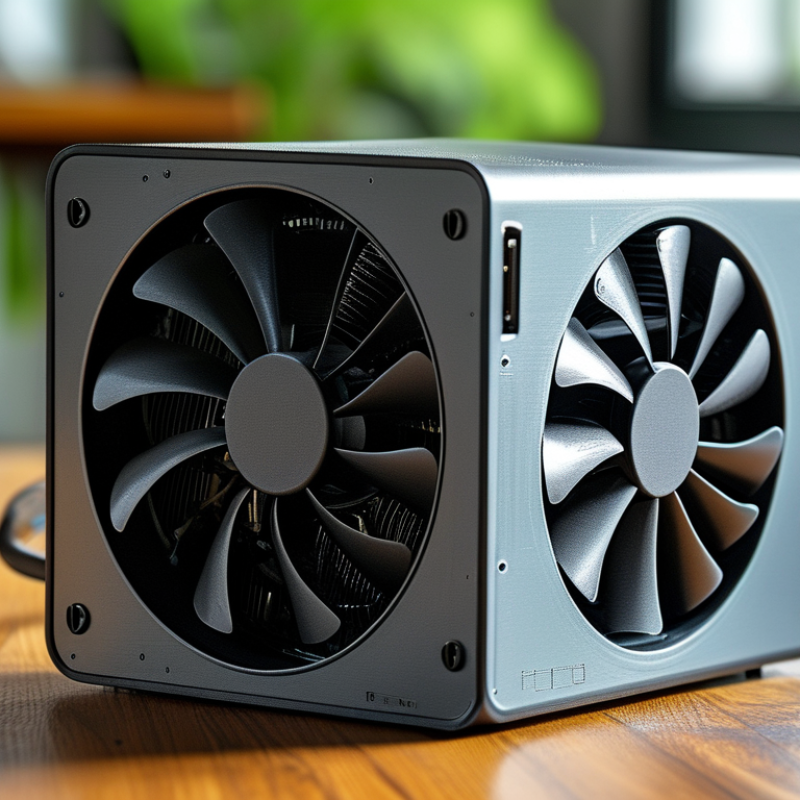
Understanding Piezo Fans: Definition and Mechanism
Piezo fans represent an innovative cooling solution that operates on the principles of piezoelectricity. These fans use piezoelectric materials to generate mechanical vibrations. When electricity flows through these materials, they expand and contract. This motion creates airflow, effectively cooling components without relying on traditional motor mechanisms. The unique approach minimizes energy consumption while providing efficient heat dissipation.
In applications like electronics cooling, piezo fans can be especially beneficial. Their compact size allows for placement in tight spaces. Moreover, they produce less noise compared to conventional fans. This can be critical in environments where silence is essential, such as in medical or laboratory settings. However, one must consider the context; piezo fans may not achieve the same airflow volume as larger fans, potentially impacting cooling in high-heat situations. It’s crucial for engineers and designers to evaluate specific cooling requirements to determine the appropriateness of piezo technology.
While piezo fans present several advantages, they are not without limitations. Their effectiveness can be influenced by ambient conditions. For instance, in high humidity or temperature, performance might not meet expectations. Understanding these nuances ensures more reliable solutions when implementing piezo fans in critical applications. Balancing benefits with potential drawbacks is key to harnessing their technology effectively.
Advantages of Piezo Fans Compared to Traditional Cooling Solutions
Piezo fans are gaining popularity as an advanced cooling solution. Unlike traditional fans, they use piezoelectric materials to create airflow. This method offers unique advantages. For example, piezo fans are often smaller and lighter. This can be crucial in compact devices. Space-saving designs lead to better integration in tech applications.
Another benefit is their energy efficiency. Piezo fans consume less power during operations. This results in lower energy bills over time. Users also notice less noise compared to standard cooling fans. The quiet operation is beneficial in sensitive environments like hospitals or libraries.
However, piezo fans are not flawless. Some may question their cooling effectiveness for high demand applications. Additionally, initial costs can be a barrier. These factors should be considered when choosing cooling solutions. Understanding both advantages and limitations is essential for informed decisions in technology.
Applications of Piezo Fans in Various Industries
Piezo fans are becoming increasingly popular across various industries due to their unique advantages. In electronics, they provide efficient cooling solutions for delicate components. The fans use piezoelectric materials, producing vibrations to create airflow. This is especially useful in devices that require silent operation. Their compact size allows manufacturers to integrate them into tighter spaces, maintaining aesthetics without sacrificing performance.
In the automotive sector, piezo fans play a crucial role. They help regulate temperatures in electric vehicles. With the rise of EVs, maintaining battery performance is vital. The fans ensure that batteries operate within an optimal temperature range. This contributes to longevity and efficiency. Additionally, piezo fans are used in medical devices. They cool sensitive equipment, essential for accurate diagnoses and treatments.
However, there are also challenges to consider. The initial cost can be higher compared to traditional fans. Manufacturers might hesitate due to budget constraints. There’s a need for ongoing research to enhance their efficiency further. The technology is promising, but not all users maximize its potential yet. As industries evolve, piezo fans will likely become more mainstream, addressing current limitations.
Energy Efficiency and Environmental Impact of Piezo Fans
Piezo fans are gaining attention for their
energy efficiency. Unlike traditional fans, they use
piezoelectric materials to produce airflow. This method consumes significantly
less power, which can lead to lower electricity bills. In environments like
data centers or residential areas, lower energy consumption is a substantial gain.
This reduced demand on power sources also translates to a smaller carbon footprint.
Environmental impact is a crucial aspect of piezo fan technology. These fans generate less waste heat, improving
the overall energy balance. They also operate quietly, minimizing noise pollution. In addition, piezo fans have
longer lifespans, which means less waste in landfills.
However, it's worth noting that while they are more efficient, the materials used in piezo technology can raise
concerns over environmental sustainability.
Adopting piezo fans involves considering these nuances. The initial cost might be higher compared to traditional fans.
Yet, the long-term savings could outweigh this cost. Ultimately, as we navigate the balance between energy efficiency
and environmental impact, piezo fans offer promising, yet complex, solutions.
Challenges and Limitations of Using Piezo Fans for Cooling
When considering piezo fans for cooling, several challenges arise that warrant attention. One significant concern is efficiency. Piezo fans typically have lower airflow rates compared to traditional fans. This may lead to inadequate cooling in settings that require robust temperature control. The trade-off between size and performance can impact their functionality, particularly in larger systems.
Another challenge is durability. Piezoelectric materials can be sensitive to environmental factors. Exposure to moisture or extreme temperatures can reduce their lifespan. Users may find themselves replacing piezo fans more frequently, which adds to maintenance costs. Moreover, the technology requires precise control systems, which can complicate installation and increase the risk of failure if not managed correctly.
Cost is also a limitation. While piezo fans can offer unique advantages, their initial investment can be high. Budget constraints might deter potential users from adopting this technology, leading to a disconnect between demand and availability. Additionally, the niche nature of piezo fans means limited access to support and parts. Users might experience challenges in sourcing replacements or even technical assistance, which complicates long-term usage.
What Are the Benefits and Challenges of Using Piezo Fans for Cooling?
| Dimension |
Details |
| Cooling Efficiency |
Piezo fans provide efficient cooling with lower energy consumption compared to traditional fans. |
| Size and Weight |
They are often smaller and lighter, making them suitable for compact devices. |
| Noise Level |
Piezo fans operate quietly, reducing overall noise in sensitive applications. |
| Response Time |
They have a fast response time, allowing for quick adjustments in cooling performance. |
| Durability |
Piezo fans typically have a longer lifespan due to fewer moving parts. |
| Cost |
Higher initial cost compared to conventional fans, but potential for savings in the long run. |
| Power Supply |
Require specific power delivery that might complicate integration in some designs. |
| Heat Dissipation |
Effectiveness can be limited in high-temperature environments, requiring additional management. |