How to Choose the Right Piezo Fan for Your Needs?
Choosing the right Piezo Fan can be crucial for optimizing thermal management in modern electronic devices. According to a 2022 market report by Frost & Sullivan, the demand for effective cooling solutions, such as Piezo Fans, has risen by 15% annually. This trend is driven by the increasing need for compact and efficient thermal systems in sectors like automotive and consumer electronics.
Expert David Reynolds, a leading figure in thermal management technologies, emphasizes, "Selecting the appropriate Piezo Fan is essential for balancing performance and efficiency." His insights highlight the intricate balance between fan size, airflow, and acoustic noise levels. Engineers often seek to customize their cooling solutions, but misunderstandings can lead to suboptimal choices.
Piezo Fans offer unique advantages, such as low power consumption and silent operation. However, there are many types on the market, each with specific applications. Delving into the various options and specifications can be overwhelming, but making informed decisions is crucial. Accurate selection can enhance performance and prolong the lifespan of devices.
Understanding Piezo Fans: Basics and Applications
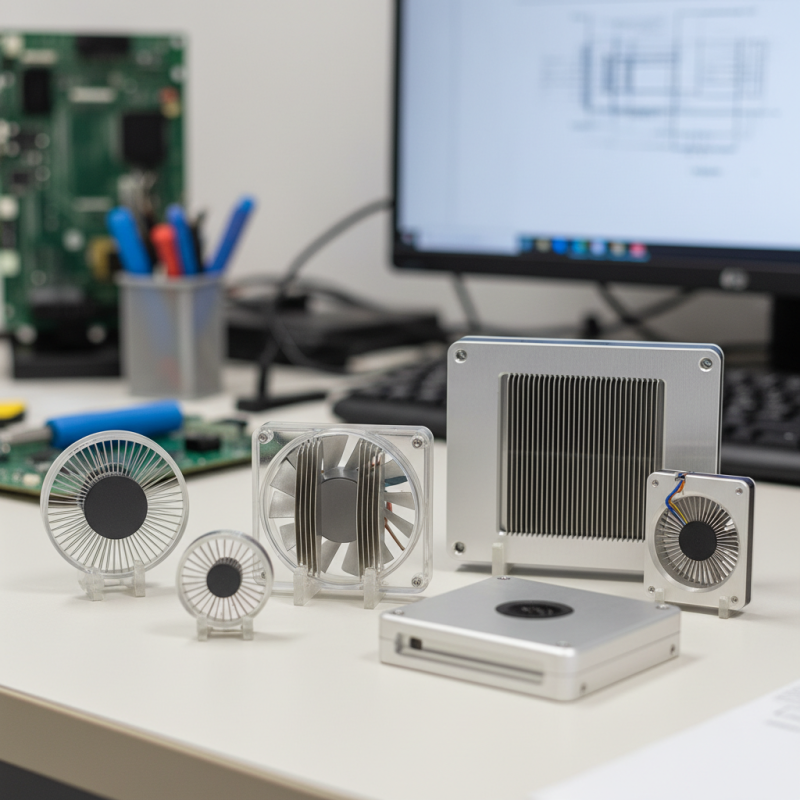
Piezo fans offer a unique solution for cooling and airflow needs. These fans rely on piezoelectric materials to generate vibrations, creating airflow efficiently. They are compact and operate quietly, making them ideal for applications where space and noise level are critical. Industries that often use piezo fans include electronics, biomedical devices, and automotive systems.
Understanding the basics of piezo fans is essential for selecting the right one. They differ significantly from traditional fans. For instance, they usually consume less power. However, their airflow capacity may not match larger fans. Choosing the wrong fan could lead to insufficient cooling or wasted energy. It's vital to assess your specific requirements and application environment.
In practice, piezo fans may not perform well in high-pressure conditions. Users should evaluate their heat dissipation needs carefully. Some feedback from engineers indicates that piezo fans sometimes require adjustments to work optimally. Balancing size, airflow, and cooling efficiency is crucial. When selecting a piezo fan, consider your project’s demands and be prepared for trial and error.
How to Choose the Right Piezo Fan for Your Needs?
| Dimension |
Parameter |
Value |
Application |
| Size |
Dimensions (mm) |
40 x 40 x 10 |
Compact Devices |
| Voltage |
Operating Voltage (V) |
12 |
Consumer Electronics |
| Airflow |
Airflow Rate (CFM) |
25 |
Cooling Applications |
| Noise Level |
Noise (dBA) |
30 |
Silent Equipment |
| Power Consumption |
Power (W) |
1.5 |
Energy-Efficient Systems |
| Temperature Range |
Operating Temperature (°C) |
-20 to +70 |
Industrial Applications |
Key Factors to Consider When Selecting a Piezo Fan
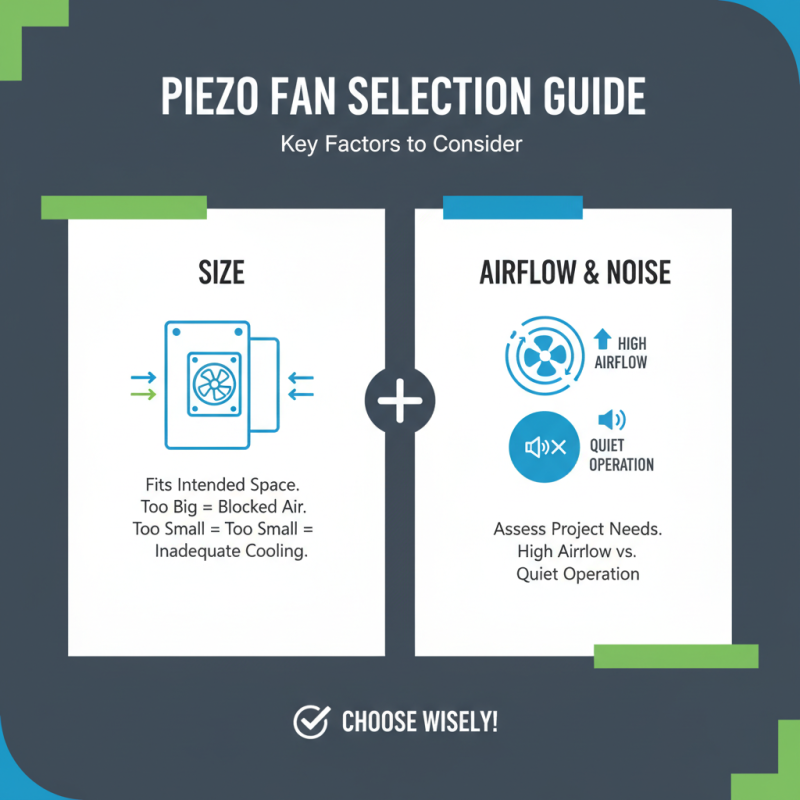
When selecting a piezo fan, several key factors come into play. The size of the fan is crucial. Ensure that it fits the intended space perfectly. A fan that is too large can impede airflow, while one that is too small may not provide adequate cooling. Moreover, consider the airflow requirements of your project. Some applications need higher airflow rates, while others require quieter operation. Assessing these needs will guide your selection.
The frequency and driving voltage are additional aspects to take into account. Different piezo fans operate efficiently at various frequencies. Understanding the operational environment is also essential. For instance, if the fan will be subjected to high temperatures, it is important that the materials can withstand such conditions. Additionally, some users overlook the importance of power consumption. A fan that uses too much energy can lead to inefficiencies. Balancing performance and efficiency is a key challenge.
Understanding the reliability and lifespan of the fan is vital. Not all piezo fans are created equal regarding durability. Inconsistencies in manufacturing can affect performance over time. Therefore, it’s wise to review technical specifications and user experiences. Researching these details can help avoid potential problems down the line. Choosing wisely today will save time and resources in the future.
Comparing Performance Metrics of Different Piezo Fans
When selecting a piezo fan, it's essential to compare performance metrics to ensure you meet your specific needs. Start by evaluating airflow efficiency. Measure the amount of air the fan can move. This metric directly affects cooling efficiency in your application. Fans with higher airflow ratings are often more effective for heat dissipation.
Next, consider the noise level. Some piezo fans are designed to operate quietly, while others may produce more sound. This can impact environments where silence is critical, such as in hospitals or libraries. Testing the decibel levels can provide insight into which fan suits your space best. Additionally, check the fan's durability. Look for specifications that indicate its lifespan and resistance to wear. A fan that doesn't last long can lead to increased maintenance costs.
It’s also crucial to reflect on your specific application. Not every fan performs well in all conditions. An industrial setting may require different metrics compared to a home appliance. Therefore, identify the unique challenges you face. Ask yourself: are you ventilating a small area or a large space? Each situation demands a tailored solution. Balancing performance metrics versus real-world applications can sometimes expose gaps in your initial selection process.
Evaluating Size and Mounting Options for Piezo Fans
When selecting a piezo fan, size and mounting options play a crucial role.
The right size ensures efficient airflow and thermal management. A study from the
International Journal of Thermal Sciences highlights that a fan's diameter can
affect cooling efficiency by up to 30%. Small fans fit confined spaces but
may struggle with airflow. Larger fans provide more effective cooling but require adequate mounting space.
Mounting options include various configurations. Some fans are designed for surface mounting, while others fit into
specialized housings. The mounting mechanism influences vibration and noise levels. Reports suggest that improper
mounting can cause vibrations, decreasing the fan's lifespan by nearly 20%.
Consider how you will mount the fan, keeping in mind the environmental factors like vibration and heat exposure.
Tip: Always double-check the mounting dimensions before purchasing. Ensure your chosen fan aligns perfectly with
your design requirements. Additionally, consider using rubber mounts to reduce vibration. They can help enhance
the fan's performance over time. Evaluating both size and mounting is essential for optimal functionality in
your application.
Cost Considerations and Budgeting for Piezo Fan Purchases
When budgeting for a piezo fan, it’s essential to analyze your specific requirements. Piezo fans vary significantly in price. Understanding your application needs helps narrow your choices. Look for fundamental features that are necessary for your project. This can save unnecessary costs.
Consider the long-term impact of your purchase. While cheaper models may seem attractive, they can lead to higher maintenance costs later. Technical support can often be overlooked. High-quality fans typically come with better customer support. Investing a bit more upfront may pay off in the future.
Don’t forget to factor in shipping and installation costs. These hidden fees can quickly inflate your budget. It’s equally important to compare multiple suppliers. Each may offer different pricing and warranties. Explore options thoroughly before making a decision. This reflection allows you to make a well-informed choice that aligns with your budget.
Cost Considerations for Piezo Fan Purchases