What is a Piezo Fan and How Does It Work?
A Piezo Fan is an innovative device that harnesses piezoelectric technology to produce airflow. Dr. Emily Chen, a leading expert in thermal management, emphasizes its potential, stating, “The Piezo Fan revolutionizes cooling systems with compactness and efficiency.” This technology utilizes small vibrations to create air movement.
In various applications, the Piezo Fan offers unique benefits. Unlike traditional fans, it operates silently and consumes minimal power. This makes it ideal for electronics cooling and sensitive equipment. However, challenges remain. Some users still question its effectiveness compared to conventional fans.
Exploring the world of Piezo Fans reveals a blend of promise and complexity. Developing a deeper understanding is essential for maximizing its potential. The technology is advancing, but further innovation is necessary for broader adoption.
What is a Piezo Fan?
A piezo fan is a unique type of fan that uses piezoelectric materials to generate airflow. These materials change shape when an electric voltage is applied. This simple mechanism allows for a more compact design compared to traditional fans. Piezo fans are often found in situations where space is limited, such as in laptops or small electronic devices.
The operation of a piezo fan is based on the vibrations of its piezoelectric components. When energy is supplied, these components expand and contract rapidly. This motion pushes air, creating a cooling effect. The sound produced is usually quieter than that of standard fans. However, they may not be as powerful. The airflow can vary depending on the applied voltage, which means they can be adjusted for specific needs.
While piezo fans offer innovative solutions, they have limitations. The cooling capacity might not meet all applications. Additionally, their performance can be affected by environmental factors, like humidity. Feedback from users often points to these shortcomings. Thus, while piezo fans hold potential, exploring their weaknesses is crucial.
Principle of Operation for Piezo Fans
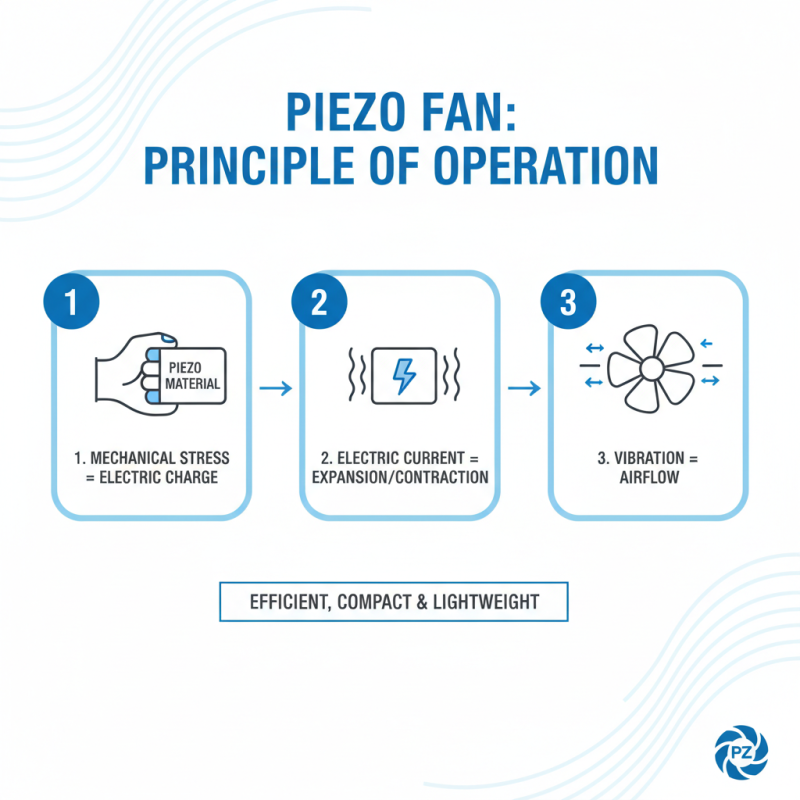
Piezo fans utilize a unique principle of operation based on piezoelectricity. This technology involves materials that produce an electric charge when mechanically stressed. These materials expand and contract when an electric current passes through them. This movement creates vibrations, which in turn generates airflow. The design allows for compact and lightweight fans that can be highly efficient.
In operation, the fan's movement is not always predictable. Different materials have varying responses to electrical input. This unpredictability can lead to inconsistent airflow in some cases. The vibrations can create noise, which might detract from their appeal in quiet environments. Moreover, finding the right balance in the fan's design is crucial. Too much stress can cause failure, while too little will result in inadequate performance.
Piezo fans are less common than traditional fans. Their effectiveness can vary based on application and design choices. Occasionally, users encounter challenges in integrating piezo fans into existing systems. While they offer distinct advantages, like reduced size, they also present obstacles that require careful consideration. Exploring the full potential of piezo fans is an ongoing process.
Components of a Piezo Fan System
A piezo fan system consists of several key components that contribute to its efficient operation. At its core, the piezo electric actuator generates vibrations when an electric voltage is applied. This actuator is typically made from materials like lead zirconate titanate (PZT), known for its excellent piezoelectric properties. When activated, these materials expand and contract rapidly, producing a high-frequency vibration.
Attached to the actuator is a diaphragm or membrane, which amplifies these vibrations. This diaphragm helps convert the mechanical energy from the actuator into air movement. Studies reveal that piezo fans can create airflow of up to 2.5 m³/h at relatively low power consumption, making them ideal for cooling small electronic devices. The size and weight of piezo fans also play a crucial role; they are significantly more compact than traditional fans, allowing for more flexible design options in electronics.
Another critical component is the power supply or controller. This device regulates the voltage and frequency supplied to the actuator. The implementation of optimized power control can enhance fan efficiency. However, piezo fans are not without challenges. They may not perform well in larger applications, and their effectiveness diminishes under high ambient temperatures. These factors warrant careful consideration when designing systems that rely on piezo fan technology.
Performance Metrics of Piezo Fans
This bar chart illustrates the performance metrics of a piezo fan, showcasing airflow in cubic feet per minute (CFM), noise level in decibels (dBA), power consumption in watts (W), and vibration level in millimeters per second (mm/s). These metrics help in evaluating the efficiency and suitability of piezo fans in various applications.
Applications of Piezo Fans in Technology
Piezo fans are revolutionizing various industries with their unique capabilities. These fans use
piezoelectric materials to create airflow. They are compact, efficient, and require minimal energy to operate. Due to their design,
they can be used in applications where traditional fans are impractical.
In the electronics sector, piezo fans play a crucial role in thermal management.
According to industry data, nearly 30% of electronic device failures are due to overheating. By implementing piezo fans,
companies can improve device reliability and longevity. Their compact size allows for incorporation into small gadgets, like
smartphones and laptops, without adding significant bulk.
Medical technology is another area benefiting from piezo fans. In devices like portable imaging equipment, maintaining optimal
temperatures is essential. Reports indicate that using piezo fans can enhance cooling efficiency by up to 40%.
However, this technology is still developing. Challenges remain regarding the noise levels produced during operation. As industries
explore these fans, the focus must be on balancing performance with user comfort.
Advantages of Using Piezo Fans Over Traditional Fans
Piezo fans are revolutionizing the cooling industry. They use piezoelectric materials to generate airflow. This technology differs significantly from traditional fan designs.
One major advantage of piezo fans is their compact size. They take up less space, making them ideal for tight spots. Traditional fans often need more room for blades to spin. Piezo fans, on the other hand, exert pressure instead of relying on movement. This design enables more versatile applications, especially in electronics where space is limited.
Another key benefit is noise reduction. Piezo fans operate quietly compared to regular fans. This makes them attractive for noise-sensitive environments. Businesses and homes can enjoy cooler air without disruptive sounds.
Tips: Consider where you need airflow most. Look for areas that require cooling without noise. Experiment with different placements for optimal effectiveness. Also, be mindful of power consumption; piezo fans may offer lower energy usage, but assessing performance is essential.