Best Pzt Material Applications and Advantages Explained?
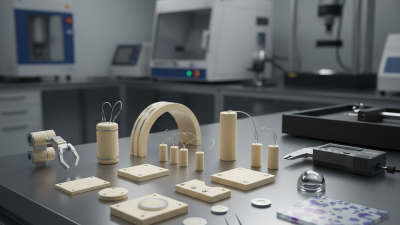
PZT material, or Lead Zirconate Titanate, stands out in the realm of piezoelectric materials. Its unique properties allow it to convert mechanical energy into electrical energy efficiently. This capability makes it invaluable in various applications, including sensors, actuators, and transducers. PZT material is widely used in industries such as aerospace, medical devices, and consumer electronics.
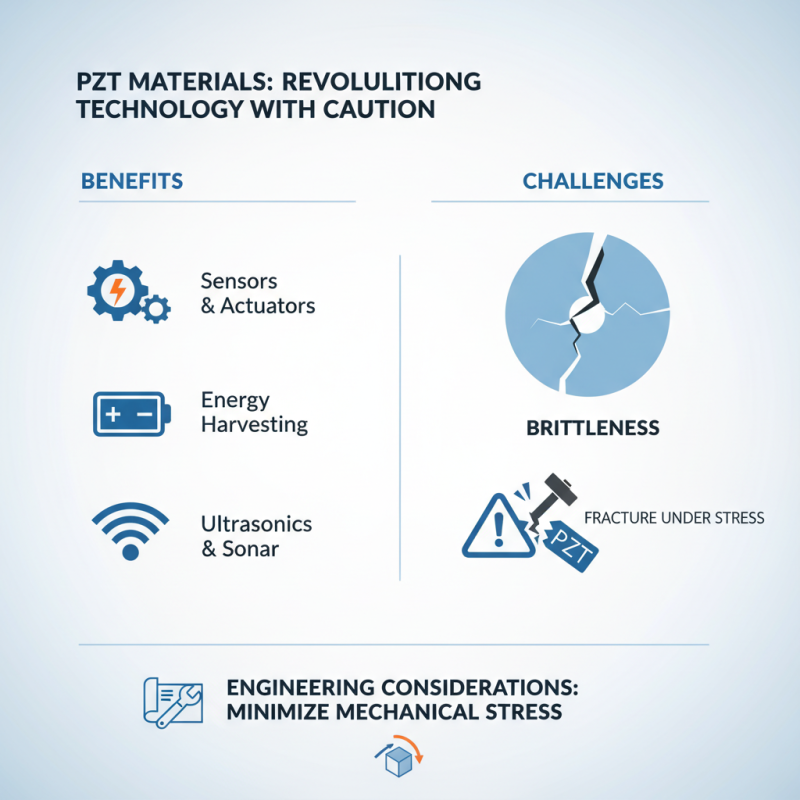
The advantages of PZT material are hard to ignore. Its high electromechanical coupling coefficient leads to excellent performance in devices. This material also exhibits a strong piezoelectric effect, making it ideal for sound generation and vibration control. Despite its benefits, there are challenges to consider. For instance, the brittleness of PZT can limit its use in certain environments. Addressing these limitations is crucial for its future applications.
Understanding the best PZT material applications can spark innovation. With ongoing research, new possibilities emerge. The potential to enhance technology exists, yet it requires careful consideration of material properties and constraints. Exploring these aspects opens doors to advancements in many fields.

Best PZT Material Applications and Advantages Explained
PZT materials have diverse applications across various industries due to their piezoelectric properties. These materials are utilized in sensors, actuators, and transducers. Reports indicate that the global piezoelectric ceramics market was valued at approximately $1.5 billion in 2022. This figure is projected to grow, reflecting increased demand for PZT in medical imaging and robotics.
In medical devices, PZT plays a crucial role. Ultrasound machines often rely on PZT transducers to convert electrical energy into sound waves. This application improves diagnostic capabilities significantly. However, the energy efficiency of PZT can be a concern. Some studies suggest that there is a need for improved material formulations to enhance durability and performance longevity.
PZT materials are also prevalent in automotive applications. They enable noise reduction technologies and vibration control systems. Reports show that the adoption of piezoelectric materials in vehicles will rise as emission regulations tighten. Not all PZT types perform well under all conditions. Thus, continuous research is necessary to optimize their properties for specific applications.
Overview of PZT Materials: Properties and Classification
PZT, or lead zirconate titanate, is a versatile ceramic material. It exhibits remarkable piezoelectric properties. These characteristics make it suitable for a wide range of applications. PZT is often used in sensors and actuators. Its ability to convert mechanical energy into electrical energy and vice versa is crucial.
In terms of classification, PZT materials can be categorized based on composition and phase structure. There are hard and soft PZT types. Hard PZT materials are known for their high mechanical strength. Meanwhile, soft PZT varieties are favored for their sensitivity and higher electromechanical coupling coefficients. The differences in their properties cater to various application needs.
However, the use of PZT isn't without challenges. Processing PZT can be complex and requires careful control. The environmental impact of lead content raises concerns too. As one considers its advantages, it’s equally important to reflect on these limitations. Balancing performance and environmental issues is an ongoing task.
Best Pzt Material Applications and Advantages Explained
| Application |
Advantages |
Properties |
Classification |
| Ultrasonic Transducers |
High-frequency operation, small size. |
High piezoelectric coefficient. |
Soft, hard PZT. |
| Medical Imaging |
Excellent sensitivity, high resolution. |
Good mechanical properties. |
Relaxor, normal PZT. |
| Actuators |
Fast response time, precise control. |
High energy density. |
Lead zirconate titanate. |
| Sensors |
Robust performance in various environments. |
High sensitivity to pressure changes. |
Class 1, Class 2 PZT. |
| Energy Harvesting |
Sustainable energy source, low cost. |
Excellent piezoelectric properties. |
Multi-layer PZT. |
Key Applications of PZT Materials in Industry and Technology
PZT materials, or lead zirconate titanate, play a crucial role in various industries. Their piezoelectric properties make them ideal for sensors and actuators. For instance, they are used in ultrasonic transducers, which convert electrical signals into sound waves. This transformation is vital in medical imaging and industrial applications.
In the automotive sector, PZT materials are employed in smart sensors that enhance vehicle performance. They monitor pressure, acceleration, and even tire health. Their ability to generate an electric charge under mechanical stress allows for real-time data collection. However, integrating these sensors requires careful consideration of the environmental factors they face.
Moreover, PZT is finding its way into consumer electronics. It is in microphones and loudspeakers, improving sound quality. Despite their advantages, challenges remain. Issues like temperature sensitivity can impact performance. Developers must address these to harness the full potential of PZT materials. In conclusion, while the benefits are significant, ongoing research and reflection are needed to overcome existing limitations.
Advantages of Using PZT Materials in Various Applications
PZT (Lead Zirconate Titanate) materials are widely known for their exceptional piezoelectric properties. This makes them valuable in various fields, including electronics, medical devices, and aerospace. According to a recent market report, the global demand for PZT materials is projected to grow by 7% annually. This surge stems from the need for compact and efficient devices.
Using PZT materials offers numerous advantages. They can convert mechanical energy into electrical energy and vice versa, making them ideal for sensors and actuators. The high piezoelectric constant allows for precise control in applications like ultrasound imaging. Additionally, PZT is cost-effective compared to other piezoelectric materials, enhancing its appeal for developers.
Tips: Always evaluate the specific requirements of your project when choosing PZT materials. Consider the operating temperature and the intended application. Remember, while PZT has many advantages, it can be brittle. Proper design can mitigate the risk of material failure. Make sure to account for these factors to maximize performance.
Challenges and Limitations of PZT Material Utilization
PZT materials have revolutionized various fields, but they come with certain challenges. One significant limitation is their brittleness. This makes them prone to fractures under stress. It’s crucial for engineers to design devices minimizing mechanical stress on these materials. For example, in actuators, improper design can lead to premature failure, negating their advantages.
Temperature dependence is another critical issue. PZT materials may not perform consistently across varying temperatures. This affects their reliability in real-world applications. Engineers must take this into account when selecting materials for specific environments. Testing is essential to ensure the material's effectiveness in all conditions.
Additionally, there’s the issue of manufacturing complexity. Creating PZT ceramics often involves intricate processes. This can lead to higher production costs and time delays. Many industries are seeking cost-effective strategies but find it challenging. This highlights the need for innovation in material processing to overcome these hurdles. Addressing these limitations could unlock even greater potential for PZT materials in future applications.
Conclusion
PZT material, or lead zirconate titanate, is a versatile ferroelectric ceramic known for its remarkable piezoelectric properties, making it invaluable in various industrial and technological applications. Its classification into different forms highlights the range of uses, from sensors and actuators to ultrasonic devices and energy harvesting. The advantages of using PZT materials include their high sensitivity, efficiency, and reliability for precise measurements and control in applications such as robotics, medical imaging, and consumer electronics.
Despite these benefits, the utilization of PZT materials does face challenges, such as environmental concerns related to lead content and material fatigue over time. Research into alternative compositions and innovations continues, pointing towards a promising future for PZT material development, which aims to enhance performance while minimizing ecological impact. As technology evolves, the applications of PZT materials are expected to expand further, paving the way for groundbreaking advancements in various fields.