How to Use Piezoelectric Ceramic Disc in Various Applications?
The "Piezoelectric Ceramic Disc" is a fascinating component in modern technology. Dr. Emily Hart, a leading expert in piezoelectric materials, once stated, "The potential of Piezoelectric Ceramic Discs is vast, limited only by our imagination." This quote highlights the diverse applications of this innovative material in various fields.
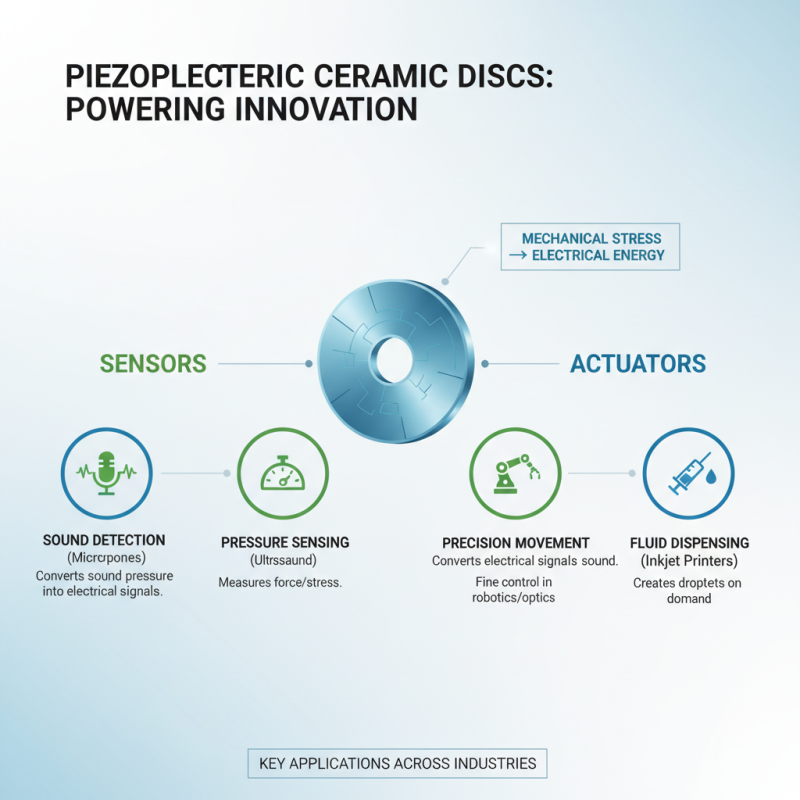
Piezoelectric Ceramic Discs can convert mechanical energy into electrical energy, making them ideal for sensors, actuators, and transducers. In medical devices, these discs help in ultrasound imaging. They offer precise movement in robotics, enhancing their functionality. The versatility of these discs presents unique challenges and opportunities.
Despite their advantages, integrating Piezoelectric Ceramic Discs into devices isn't always seamless. Design complexities can arise, necessitating thoughtful engineering. Mistakes in placement or material selection can lead to inefficiencies. This prompts ongoing research and development. Understanding these potential pitfalls helps in maximizing performance while minimizing drawbacks.

Understanding Piezoelectric Ceramic Discs: Principles and Properties
Piezoelectric ceramic discs are fascinating components that convert mechanical stress into electrical energy. This phenomenon relies on the properties of certain ceramics. When these materials are deformed, they generate an electric charge, making them useful in various applications. The energy generated correlates with the amount of stress applied. This means precision in application is vital for optimal performance.
When working with piezoelectric ceramics, consider these tips: ensure a proper connection to electrical circuits. Poor connections can lead to inconsistent performance. Also, avoid extreme temperatures that can degrade the material. The crystal structure could become unstable under harsh conditions, altering its efficiency.
These discs can be used in sensors, actuators, and even energy harvesting devices. While they are highly efficient in conversion, some applications may require additional conditioning circuits. Poor placement can also affect performance. Evaluate the environment and loading conditions carefully for best results. A misaligned sensor can yield inaccurate readings. The balance between use and limitations is key in harnessing their full potential.
Applications of Piezoelectric Ceramic Discs
Common Applications of Piezoelectric Ceramic Discs in Industry
Piezoelectric ceramic discs have diverse uses across industries. They transform mechanical stress into electrical energy. This unique property makes them valuable in sensors and actuators. These discs are commonly found in applications like sound devices and medical equipment. For example, they are integral in ultrasound machines, where they convert electrical signals into sound waves. This process is essential for imaging during medical examinations.
In automotive applications, piezoelectric ceramic discs are crucial for fuel injectors. They help achieve precise fuel delivery, improving combustion efficiency. Additionally, these discs play a role in vibration monitoring systems. They can detect changes in vibration patterns, alerting users to potential mechanical issues. However, their performance can vary based on temperature and mechanical stress.
Not all applications achieve optimal results. Some industries struggle with integration challenges. This can lead to inconsistent performance. Engineers must consider these factors during design. Further research is needed to enhance reliability and adaptability. Despite these hurdles, the potential of piezoelectric ceramic discs remains significant. They offer innovative solutions across multiple sectors.
How to Integrate Piezoelectric Ceramic Discs in Consumer Electronics
Integrating piezoelectric ceramic discs in consumer electronics offers exciting possibilities. These components convert mechanical energy into electrical energy. They can enhance the functionality of devices, bringing innovation to various applications. Reports indicate a growing demand in the consumer electronics market. By 2026, the piezoelectric materials market is expected to reach over $37 billion.
In smartphones and wearables, piezoelectric discs can enable advanced haptic feedback. This improves user experience significantly. Tiny vibrations mimic real-world feedback, making interactions feel more natural. Many manufacturers are exploring these technologies, yet challenges in integration remain. Achieving optimal performance without increasing device size is crucial.
Tips: When designing with piezoelectric discs, consider material compatibility. This impacts performance. Test under varying temperatures and pressures to ensure reliability. Validate your designs through prototypes to identify any flaws early. Engaging with suppliers can lead to insights into emerging trends.
How to Use Piezoelectric Ceramic Disc in Various Applications?
| Application |
Description |
Benefits |
Integration Method |
| Audio Devices |
Used for sound generation in microphones and speakers. |
High sensitivity and low power consumption. |
Direct mounting on circuits with solder. |
| Medical Ultrasound |
Employed in ultrasound imaging systems for sound waves generation and detection. |
High frequency and precise imaging capabilities. |
Embedded within transducer arrays. |
| Actuators |
Utilized for precise movement in robotic arms and other mechanical devices. |
Optimized for fast response times and energy efficiency. |
Integrated in circuit boards with control systems. |
| Energy Harvesting |
Converts mechanical vibrations into electrical energy for powering small devices. |
Sustainable power source and low maintenance. |
Placement in areas with constant motion or vibration. |
| Consumer Electronics |
Used in haptic feedback systems for touchscreens and game controllers. |
Enhanced user experience with tactile sensations. |
Embedded into device housing with proper connectors. |
Exploring the Role of Piezoelectric Ceramic Discs in Medical Devices
Piezoelectric ceramic discs are essential in medical devices. They convert mechanical stress into electrical energy. This property allows them to be used in various applications, such as ultrasound imaging. In these devices, the discs help generate sound waves that create images of internal body structures.
These discs also play a role in drug delivery systems. They can help control the release of medication. When pressure is applied, the discs activate, ensuring precise dosing. However, not all designs are perfect. Some devices face issues with energy efficiency and reliability. These challenges require ongoing research and development.
Research shows piezoelectric materials can improve patient monitoring. They are used in wearable devices to detect vital signs. Yet, the integration of these discs into new technologies is not always straightforward. Engineers must navigate complexities like size constraints and power supply issues. Addressing these challenges is crucial for advancing medical technology.
Future Trends and Innovations in Piezoelectric Ceramic Disc Technology
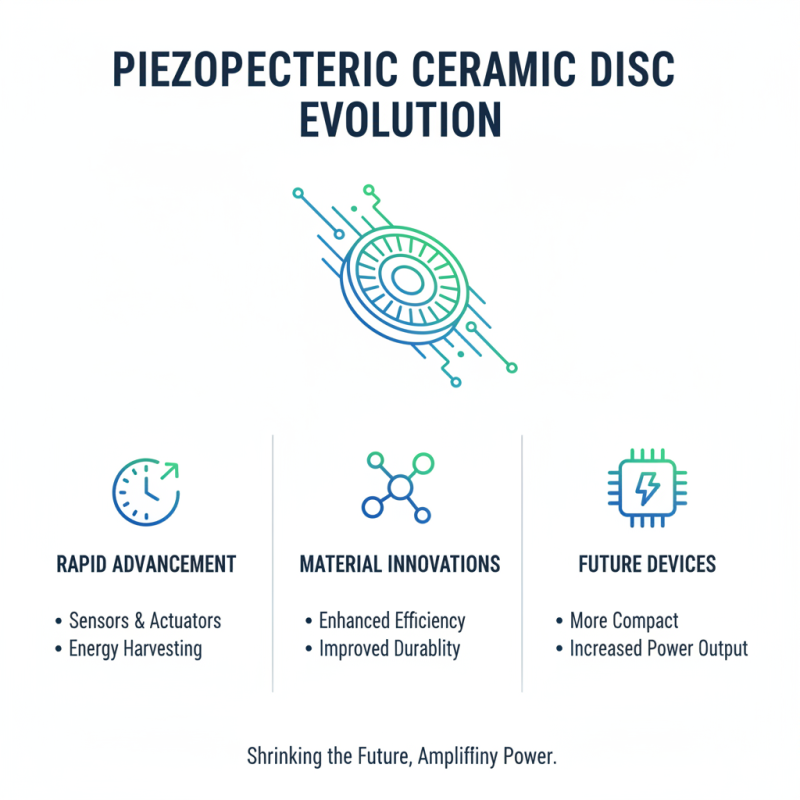
Piezoelectric ceramic disc technology is evolving rapidly. This evolution is shaping various applications, from sensors to energy harvesting devices. Recent innovations explore new materials that enhance efficiency and durability. These advancements open doors to more compact and powerful devices.
In recent developments, researchers are focusing on integrating piezoelectric ceramics with smart technology. This combination allows for real-time data collection in medical devices. Consequently, healthcare can benefit from precise monitoring systems. However, challenges remain. The manufacturing process needs improvement to reduce costs.
Sustainability is also becoming a focal point. Industries are seeking eco-friendly materials that can replace traditional ceramics. This push creates opportunities for companies willing to innovate. Nevertheless, scaling these new materials to meet demand can be daunting. Future trends suggest a shift towards multifunctional systems that could redefine applications in various fields.