How to Utilize Piezo Technology for Enhanced Performance and Efficiency?
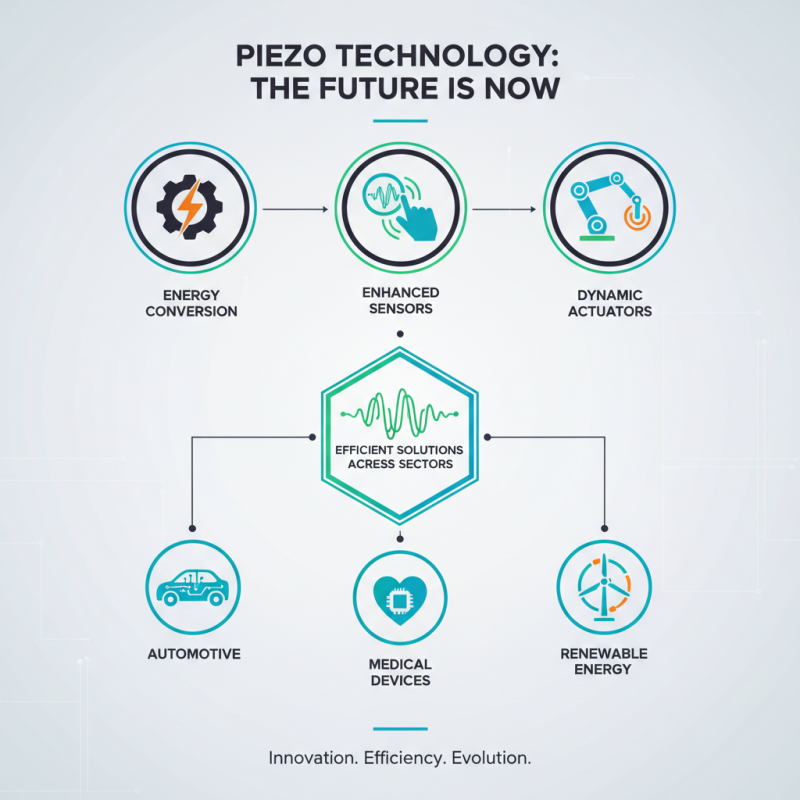
The integration of Piezo Technology in various industries is transforming performance and efficiency standards. According to a recent report by Global Market Insights, the piezoelectric devices market is projected to exceed $40 billion by 2026, driven by increased demand in automation systems. Such growth stems from the unique capabilities of Piezo Technology to convert mechanical stress into electrical energy.
Experts like Dr. Emily Chen, a prominent figure in the field, state, "Piezo Technology offers unmatched precision that enhances system responsiveness." This precision is crucial in applications such as medical devices and robotics, where even minor changes can lead to significant performance benefits. However, challenges remain. Many organizations struggle with the initial costs and integration processes. Key industry players are exploring better strategies to adopt this technology while ensuring a return on investment.
Data indicates a crucial gap in understanding Piezo Technology's full capabilities. Companies need to invest not only in technology but also in training personnel. As industries race towards innovation, leveraging Piezo Technology may be the key to staying competitive. Striking a balance between adopting advanced technology and managing costs remains an ongoing concern in this evolving landscape.
Understanding Piezo Technology: Principles and Mechanisms
Piezo technology is fascinating and complex. It harnesses the piezoelectric effect, where materials generate electric charge under mechanical stress. This principle is crucial in various applications, from sensors to actuators. Understanding the mechanisms behind this can lead to enhanced performance and efficiency in numerous devices.
When stressed, piezo materials like quartz or ceramics deform, generating voltage. This property allows precise control in applications. For instance, they are used in medical devices to turn mechanical signals into electrical signals. However, not all piezoelectric materials perform equally. Some may have undesirable hysteresis effects, leading to inefficiencies. Therefore, selecting the right material is essential.
Incorporating piezo technology may appear straightforward, but challenges exist. Calibration is often necessary for optimal performance. Additionally, the sensitivity of piezo devices can vary greatly. Thus, engineers must be diligent in design and testing stages. While piezo technology offers vast potential, careful consideration is crucial for success.
Performance and Efficiency Metrics of Piezo Technology Applications
Applications of Piezo Technology Across Various Industries
Piezo technology is transforming various industries with its unique applications. In healthcare, it enhances ultrasonic imaging. This technology improves the clarity and accuracy of images. Medical devices benefit from precise, responsive actuators. They can produce vibrations that help in non-invasive surgeries. However, there can be challenges with calibration and integration.
In the automotive sector, piezo technology is improving fuel efficiency. Fuel injectors equipped with piezo actuators deliver accurate fuel sprays. This leads to better combustion and lower emissions. Yet, the complexity of installation may cause delays. Continuous testing and refinement are essential to overcome such hurdles.
Moreover, in consumer electronics, piezo actuators offer touch-sensitive interfaces. They enable devices to have haptic feedback, making interactions more intuitive. However, durability is a concern. Over time, these actuators may wear out or become less responsive. Finding a balance between performance and longevity remains a crucial area for evolution in this field.
Benefits of Integrating Piezo Technology for Performance Enhancement
Integrating piezo technology can significantly enhance performance in various applications. This innovative approach uses materials that generate electricity when subjected to mechanical stress. By harnessing this energy, systems can operate more efficiently and responsively. For instance, piezo sensors can improve the accuracy of data collection in robotics, resulting in more precise movements.
Consider the vibration levels in mechanical systems. Piezo devices can absorb excessive vibrations, extending the lifespan of machinery. This not only saves costs on replacements but also minimizes downtime. Enhanced efficiency can lead to energy savings, which is crucial in today's resource-conscious environment.
Tips for implementing piezo technology effectively include:
- Analyze your current systems. Understand where efficiency drops.
- Start with smaller applications. Measure results before wider integration.
- Train your team. Knowledge is key to leveraging new technologies.
Despite these benefits, some implementations may not meet expectations. Regular reviews are essential to ensure objectives align with performance enhancements. Understanding limitations will pave the way for better outcomes.
How to Utilize Piezo Technology for Enhanced Performance and Efficiency? - Benefits of Integrating Piezo Technology for Performance Enhancement
| Application |
Benefit |
Impact on Efficiency |
Typical Uses |
| Medical Devices |
Improved precision in diagnostics |
Increases diagnostic speed and accuracy |
Ultrasound imaging, surgical tools |
| Aerospace |
Weight reduction in components |
Enhances fuel efficiency |
Sensors, actuators, control systems |
| Automotive |
Enhanced sensor capabilities |
Improves safety features and infotainment systems |
Adaptive cruise control, lane departure warning |
| Consumer Electronics |
Touch sensitivity improvements |
Enhances user experience |
Smartphones, tablets, wearables |
| Industrial Automation |
Increased responsiveness of machines |
Boosts productivity and reduces downtime |
Robots, assembly lines, packaging systems |
Challenges and Limitations of Piezo Technology Implementation
Implementing piezo technology presents unique challenges. One major limitation is the cost. According to industry reports, piezoelectric materials can be expensive, impacting overall production budgets. This hampers widespread adoption in various applications. Companies often face financial barriers when integrating these advanced solutions.
Another challenge lies in the durability of piezo devices. Studies have indicated that piezoelectric materials can degrade over time, especially under harsh conditions. Environmental factors like temperature and humidity can significantly affect performance. This raises concerns for long-term reliability, impacting user confidence.
Furthermore, there are technical hurdles in integration. Piezo systems require precise calibration and control. The need for specialized knowledge and training can deter companies from fully embracing this technology. Many organizations struggle with technical compatibility. This can slow down the pace of innovation in sectors looking for enhanced performance. It's essential to continuously reflect on these limitations. Addressing them could unlock the true potential of piezo technology.
Future Trends in Piezo Technology and Their Potential Impact
The future of piezo technology is promising and dynamic. As industries evolve, the applications of piezoelectric materials are expanding. Enhanced sensors and actuators are at the forefront of this trend. These devices can convert mechanical energy into electrical energy, offering efficient solutions across various sectors.
In automotive engineering, piezo elements play a pivotal role. They enable precise fuel injection, improving engine efficiency. However, challenges remain. The integration of these components can be complex. Not every system is compatible with piezo technology, leading to potential inefficiencies.
Another area to watch is healthcare. Piezo sensors can improve patient monitoring. They provide real-time data, enhancing diagnostic procedures. Yet, there are hurdles to overcome. Ensuring data accuracy and maintaining patient comfort are ongoing concerns. Adjustments are needed to fully realize potential benefits.