



Piezoelectric Effect: Definition & Application
1.Definition of Piezoelectric Effect
2.Piezoelectric Effect: Direct and Inverse
3.How Piezoelectric Effect Works
4.Applications of Piezoelectric Effect
5.Conclusion
Definition of Piezoelectric Effect
The piezoelectric effect is a physical phenomenon which is observed as a response of an electric charge generated when mechanical force is applied to a material. The term "piezoelectric" is from Greek words that mean "to press" or "to squeeze." The effects are encountered in crystalline materials that have no centre of symmetry. When such a crystal is bent, the positive and negative charges are separated over its surfaces to generate electric voltage.
The piezoelectric effect is bidirectional, a piezoelectric material is able to change mechanical energy into electrical energy and vice versa. This dual ability renders it with great potential in modern technology, in particular in sensors, actuators, energy harvesters and acoustic devices.
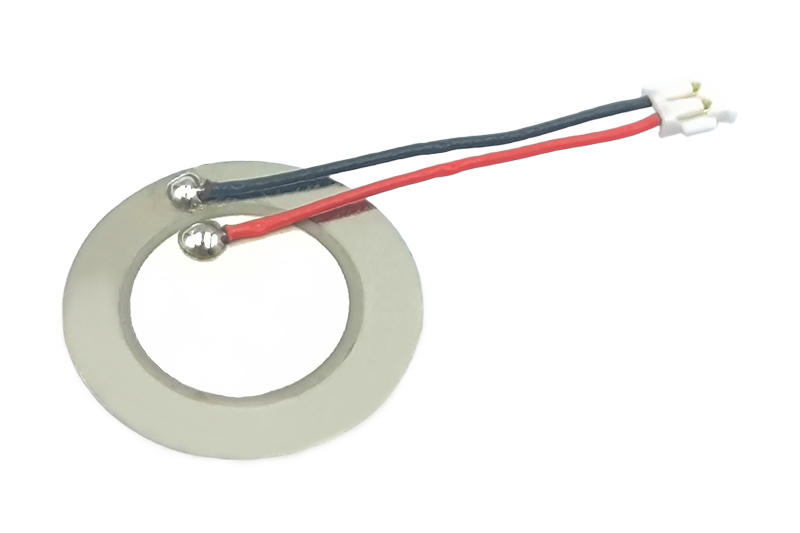
Piezoelectric materials can be natural crystals like quartz, Rochelle salt and tourmaline; synthetic ceramics, such as Lead Zirconate Titanate PZT and barium titanate (BaTiO₃); polymer materials, as polyvinylidene fluoride-PVDF)
Piezoelectric Effect: Direct and Inverse
There are two types of piezoelectric effect mainly: Direct and Inverse.
Direct Piezoelectric Effect
Application of mechanical stress (pressure, vibration or bending) on a piezoelectric material generates an electric charge. This principle is used for sensors, microphones, piezo accelerometers and pressure sensors. It is also applied to energy harvesters.
Inverse Piezoelectric Effect
When a piezoelectric material is subject to an electric voltage and its shape is altered. The electric field causes mechanical strain in the electric lattice. This effect is used in ultrasonic transducers, actuators and positioning equipment where extreme accuracy is important.
How Piezoelectric Effect Works
The internal structure of the crystalline bodies is important. In these crystals, the atoms are not symmetrically distributed. When no stress is applied,the centre of positive and negative charge is equally spaced so that the material is electrically neutral.
Mechanical stress destroys this symmetry, shifting the centers of charge, and creating an overall dipole moment. The split generates a voltage across the crystal faces, proportional to the stress being applied on it. Conversely, an external voltage produces an internal electric field which causes the atoms to move relative to each other, causing the mentioned material to grow somewhat small or to shrink. They are fast-moving, the displacement is minute but is perfectly controlled so that reception or actuation by piezoelectric actuators is suitable for precision equipment.
Applications of Piezoelectric Effect
Piezoelectric effect is of great importance in modern science and engineering, which transforms mechanical energy to electrical energy and vice versa. It's extensively used in a wide variety of businesses.
Automotive Applications
Piezoelectric sensors are used for pressure, vibration and acceleration sensors for engines, brakes and safety devices. In fuel injection systems, fuel delivery is controlled by piezoelectric actuators to learn high precision and better combustion efficiency which in turn reduces emissions. These actuators can have microsecond response.
Industrial Applications
Piezoelectric elements are used for ultrasonic cleaning machines, welding machinery and precision positioning in industrial automation, delivering quick response and high precision-extremely important for manufacturing the semiconductor industry and in microfluidics.
Healthcare Applications
Diagnostic ultrasound imaging uses sound waves at high frequencies that originate in engines that convert electrical symphony to sound waves (the transducer), to returns that convert sound waves back to electrical (the receiver). These shaving heads are also used in surgical instruments, dental scalers and drug delivery systems.
Consumer Electronics Applications
Piezoelectric components are common in buzzers, microphones and loudspeakers which generate or detect sound. Watches use Quartz crystals to maintain good time keeping. Lighters and gas igniters use small piezoelectric crystals which spark through mechanical collision.
Energy Harvesting and Environmental Sensing Applications
Piezoelectric materials also help in obtaining energy from vibrations, footsteps or from movements of machinery to power small electronic sensors or wireless devices in remote locations. For instance, piezoelectric tiles installed on public walkways convert the energy of people walking on them to electricity. In structural health monitoring piezoelectric sensors are used to measure cracks or stress in bridges, aircraft or buildings and hence anticipate damage sufficiently well in advance.
Conclusion
The piezoelectric effect serves as the link between mechanics and electricity, which allows materials to transform pressure or vibration into an electric current and transform an electric current into a specific mechanical movement. From the lowly quartz crystal found in a wristwatch to high-tech ultrasonic sensors in medical imagery, it is a building technology in the field of modern engineering, unconsciously driving the advancement towards more efficient, accurate and intelligent systems.
Looking for the suitable piezoelectric ceramic solutions for your application? Contact our team of engineers right now for advice and a quote.
 Feb,06 2026