Choosing the right Piezo Ceramic Disc is more than comparing diameter, voltage, and price. It requires a clear understanding of vibration, capacitance, resonance, bonding, and operating conditions. A disc that performs well in a laboratory may respond poorly inside a humid alarm housing or a thin metal panel.
Industry reports support this growing need for careful selection. Grand View Research identifies rising demand for piezoelectric components in sensing, medical equipment, industrial automation, and consumer electronics. MarketsandMarkets also highlights automotive sensing, ultrasonic systems, and precision actuators as important application areas. These reports show market direction, but they do not replace component-level testing. That gap matters.
Small details matter.
The following ten tips focus on practical decisions behind reliable performance. They examine ceramic material, resonant frequency, electrical impedance, sensitivity, mounting method, temperature range, moisture resistance, and supplier documentation. IEEE technical literature consistently links piezoelectric performance with material composition, mechanical loading, and electrode design. Therefore, a higher voltage rating does not automatically mean better output. It may even create unnecessary power demands.
A useful evaluation begins with the actual application. Measure the available drive signal, target frequency, expected vibration, and installation space. Then compare samples under realistic conditions, including adhesive thickness and enclosure pressure. This step is often skipped. It should not be.
Specifications can look precise while remaining incomplete. Confirm tolerances, aging data, polarization direction, and batch consistency with the manufacturer. Independent verification is valuable, especially when the Piezo Ceramic Disc will operate continuously or face temperature changes. These ten tips aim to make that selection process more technical, practical, and dependable.
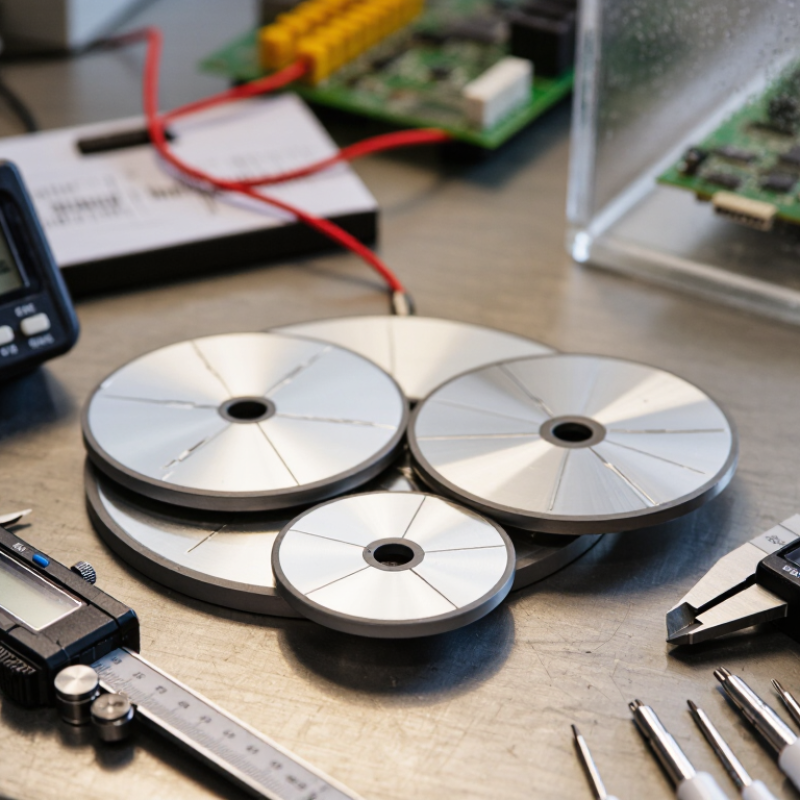
A piezo ceramic disc is more than a thin, round sound-producing part. Its ceramic layer is usually placed between two conductive electrodes. During manufacturing, an electric field aligns microscopic domains inside the ceramic. This polarization gives the disc its useful electromechanical behavior.
When voltage reaches the electrodes, the ceramic expands and contracts slightly. That movement bends the metal disc and creates vibration. The reverse effect also matters: physical pressure can generate a small electrical signal. In practical testing, I check the disc with a controlled signal, a clean mounting surface, and a reliable meter. Tiny changes in clamping pressure can alter the sound noticeably.
Choosing the right disc requires more than comparing diameter. Review the rated voltage, capacitance, resonant frequency, ceramic thickness, and operating temperature. A larger disc may produce stronger movement, but it can respond more slowly. A thinner disc may react quickly, yet tolerate less mechanical stress. The mounting method is critical. Firm bonding can improve vibration transfer, while excessive adhesive can dampen the disc.
I once judged a disc only by its loudness. That was too simple. Frequency response and long-term stability mattered more in the final assembly. Test several samples under the same conditions. Keep wires short, avoid uneven pressure, and record sound changes at different frequencies. A neat specification sheet can still mislead when the actual installation is poorly matched.
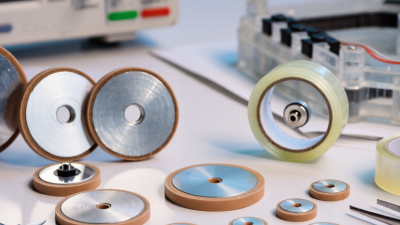
10 Tips to Choose the Best Piezo Ceramic Disc
Define electrical requirements before comparing disc sizes. Confirm drive voltage, frequency, capacitance, and polarity. Published PZT engineering data commonly lists d31 values near −170 to −274 pC/N, while relative permittivity may exceed 1,000. These figures vary with composition and temperature. IEEE Standard 176-1987 also warns that piezoelectric coefficients depend on testing direction and boundary conditions. Tip 1: Do not select by voltage alone. Check impedance at the operating frequency. Tip 2: Calculate amplifier current from capacitance and frequency.
Mechanical demands are equally important. A thin disc can produce strong displacement, but it may crack under uneven bonding. Measure diameter, thickness, preload, deflection, and expected vibration cycles. In practical prototypes, adhesive thickness often changes resonance more than expected. Tip 3: Test the disc after mounting, not only before mounting. Tip 4: Compare free and clamped resonance values. I have seen a promising sample fail because the fixture was too rigid.
Environmental requirements should be written as numbers. Specify temperature range, humidity, shock, chemical exposure, and storage time. IEC 60068 testing methods provide useful frameworks for thermal cycling, damp heat, and vibration evaluation. A 2024 industry survey on piezoelectric components reported that application reliability increasingly depends on packaging and qualification, not ceramic performance alone. That finding deserves attention. Tip 5: Require insulation resistance after humidity testing. Tip 6: Leave safety margin below the rated electric field. Tip 7: Document every mounting condition. Datasheets rarely tell the whole story.
Define Electrical, Mechanical, and Environmental Requirements
The chart compares representative engineering targets for four common piezo disc applications. Check capacitance and drive compatibility electrically, resonance frequency mechanically, and maximum operating temperature environmentally before final selection. Actual values should be confirmed against the application load, mounting method, and supplier datasheet.
Choosing the best piezo ceramic disc starts with its physical size. A larger disc usually produces stronger vibration and greater acoustic output. However, it also needs more space and may respond more slowly. Measure the mounting area before selecting a diameter. Thickness matters too. A thin disc can react quickly, while a thicker disc may handle higher mechanical stress. I once chose a disc by diameter alone, and the final assembly resonated poorly.
Material selection affects durability, sensitivity, and frequency stability. Ceramic compositions differ in dielectric behavior and mechanical strength. Ask for polarization data, capacitance tolerance, and operating temperature limits. These details reveal more than a general “high sensitivity” claim. For outdoor equipment, moisture resistance and stable bonding deserve close attention. Adhesive failure can change performance faster than ceramic aging.
Frequency should match the intended circuit and mechanical structure. A disc designed for one resonant frequency may perform weakly elsewhere. Check both resonant and operating frequencies under the actual mounting condition. Sensitivity is often listed in millivolts per pascal or decibels, so compare identical test conditions. Test several samples, not only one. Small variations are normal. My own measurements have sometimes differed from supplier data, usually because fixture pressure and cable loading were overlooked. Leave room for that uncertainty. A practical prototype test is still essential.
10 Tips to Choose the Best Piezo Ceramic Disc?
Durability starts with the operating environment. Check temperature, humidity, vibration, shock, and electrical drive limits. IEEE Standard 176-1987 defines key parameters such as d33, dielectric constant, and electromechanical coupling. These values help compare samples, but they do not predict field life alone. Ask for aging data under your real frequency and voltage. A disc exposed to repeated resonance can crack long before it looks damaged.
Mounting changes performance. A thin, even adhesive layer usually transfers vibration better than a thick, uneven layer. Avoid covering the active center unless the design requires it. Clamping too tightly can reduce displacement and create ceramic stress. IEC 60068-2-6 provides methods for vibration testing, while IEC 60068-2-27 addresses mechanical shock. Use these methods with application-specific acceleration and duration. Generic testing is not enough.
Product quality requires traceable inspection. Request capacitance, resonance frequency, impedance, thickness, flatness, and visual defect records. Sampling plans should follow a recognized quality system, such as ISO 2859-1, rather than informal checking. Verify solderability and polarity markings before assembly. Small variations matter. A disc with excellent sensitivity may still fail after poor bonding. I have learned that “stronger” adhesive is not always better. It can damp the signal or stress the ceramic during thermal cycling. Review supplier data critically, and repeat testing after mounting, not only before it.
| Tip | Evaluation Dimension | Practical Data or Typical Range | What to Check Before Selection | Recommended Choice |
|---|---|---|---|---|
| 1 | Disc Diameter | Common diameters include approximately 10–50 mm. Larger discs generally provide a larger active area and can produce greater acoustic output at suitable operating conditions. | Confirm that the diameter fits the enclosure, sound port, sensor housing, or contact surface. | Choose the smallest diameter that meets the required output and installation space. |
| 2 | Ceramic and Metal Thickness | Piezo ceramic thickness commonly ranges from about 0.1–2.0 mm, while the metal substrate may add approximately 0.1–0.5 mm depending on construction. | Thickness influences mechanical stiffness, resonant frequency, sensitivity, and resistance to handling damage. | Use a thicker or reinforced construction when the disc will experience repeated handling or vibration. |
| 3 | Operating and Resonant Frequency | Typical piezo discs may operate from audible frequencies near 1 kHz to ultrasonic frequencies above 20 kHz. Resonant frequency varies with diameter, thickness, mounting, and load. | Ask for the resonant-frequency tolerance and test conditions. A disc’s frequency can shift after bonding to a housing. | Select a disc whose measured resonance is close to the target frequency under the actual mounting condition. |
| 4 | Capacitance and Electrical Matching | Capacitance is commonly specified in nanofarads and depends on electrode area, ceramic thickness, and dielectric properties. The value may vary with frequency and temperature. | Check capacitance tolerance, insulation resistance, polarity markings where applicable, and compatibility with the driver circuit. | Match the disc capacitance with the driver’s output capability and current limitations. |
| 5 | Drive Voltage | Many small piezo discs are driven with signals from a few volts to several tens of volts peak-to-peak. The allowable voltage depends on ceramic thickness, frequency, duty cycle, and design. | Verify maximum continuous voltage, peak voltage, duty cycle, and whether the specification is RMS or peak-to-peak. | Never exceed the manufacturer’s specified electrical limits; excessive voltage can cause cracking, depolarization, or premature failure. |
| 6 | Mounting Method | Common methods include edge mounting, full-surface bonding, center support, spring contact, and mechanical clamping. Mounting significantly affects vibration amplitude and resonance. | Evaluate adhesive stiffness, bond thickness, contact area, curing temperature, and whether the mounting method dampens the active surface. | Use edge mounting or a carefully controlled adhesive layer when high vibration amplitude is required. |
| 7 | Adhesive and Environmental Durability | Temperature resistance depends on the ceramic, electrode, metal substrate, and adhesive. Many general-purpose assemblies are designed around approximately −20°C to 70°C, while specialized constructions can support wider ranges. | Check operating temperature, humidity exposure, chemical contact, thermal cycling, and vibration requirements as a complete assembly. | Choose an adhesive and disc construction rated for the full environmental range, not only the ceramic material. |
| 8 | Mechanical Durability | Piezo ceramic is brittle and may crack under bending, impact, concentrated clamping force, or rapid thermal shock. The metal substrate can improve handling strength but does not eliminate fracture risk. | Review drop, vibration, fatigue, thermal-cycle, and lead-pull test results when the product is used in portable or high-vibration equipment. | Prefer stress-relieved leads, smooth edges, protective packaging, and a mounting design that avoids bending the ceramic. |
| 9 | Product Quality and Inspection | Useful incoming checks include diameter, thickness, capacitance, resonant frequency, impedance, insulation resistance, visual defects, electrode adhesion, and lead attachment. | Request inspection limits, sampling standards, calibration records, and test conditions. Measurements should be made at consistent temperature and frequency. | Select products with traceable test data and defined acceptance tolerances for every critical parameter. |
| 10 | Application Fit and Long-Term Availability | A disc optimized for buzzers may not be suitable for precision sensing, ultrasonic transmission, or energy harvesting. Electrical, mechanical, and acoustic requirements differ by application. | Confirm output level, sensitivity, frequency stability, assembly process, expected service life, and availability of replacement material. | Test samples in the final enclosure and mounting configuration before approving the design. |
Tip: Verify every specification before comparing prices. Check the disc diameter, thickness, capacitance, resonance frequency, operating voltage, and frequency tolerance. These values affect sensitivity and circuit behavior. Ask whether measurements were taken at room temperature or across the stated temperature range. A neat table can hide important test conditions. I once focused only on resonance frequency. That was a mistake.
Tip: Confirm compatibility with the complete assembly, not only the ceramic disc. Review the driver circuit, mounting method, adhesive, wire connection, and available space. A disc may match electrically but fail after bonding. Excessive adhesive can reduce vibration. Uneven pressure can create unstable output. Request samples and test them in the real housing. Bench results are useful, but field conditions are harsher.
Tip: Examine supplier reliability through evidence, not confident promises. Request current datasheets, dimensional drawings, inspection records, and material information. Traceable batch numbers can simplify troubleshooting later. Ask about sampling procedures, production capacity, lead times, and change-control practices. Small inconsistencies matter in volume production. A supplier should explain failures clearly. Silence is a warning. My own review process still misses details sometimes, so I use a written checklist and require independent sample verification before approval.