How to Use Piezo Ceramic Disc in Electronics Projects?
In recent years, the application of Piezo Ceramic Discs has become increasingly prominent in electronics projects. These components excel in converting mechanical energy into electrical signals, which are crucial for various innovative designs. According to a report by the International Electrotechnical Commission, the global demand for piezoelectric materials is projected to grow at a rate of 9% annually from 2021 to 2026.
Renowned expert Dr. Emily Tran, a leading authority in materials science, emphasizes the value of Piezo Ceramic Discs in modern technology: “Their versatility makes them essential for both consumer and industrial applications.” Designers and engineers across sectors are harnessing these components for sensors, actuators, and energy harvesters. Yet, many newcomers to electronics may overlook the nuances of integrating these discs effectively.
While the benefits are clear, challenges exist in implementation. Some projects may encounter issues with optimal sizing or placement, leading to underwhelming performance. Proper understanding and testing become paramount for successful integration. As the field evolves, continuous learning and adaptation to new technologies will be vital for maximizing the potential of Piezo Ceramic Discs.
Understanding Piezo Ceramic Discs and Their Properties
Piezo ceramic discs are fascinating components in electronics. They convert mechanical energy into electrical energy, functioning as sensors or actuators. The unique crystal structure of piezo ceramics allows them to generate voltage when subjected to stress. This property is leveraged in numerous applications, from musical instruments to alarm systems.
The versatility of piezo ceramics also comes with challenges. Selecting the right disc for your project requires understanding specifications like resonant frequency and capacitance. Many users find themselves uncertain about these parameters. It’s common to overlook how environmental factors can impact performance. For example, humidity can alter the response of piezo elements, leading to unexpected outcomes.
Experimental approaches often expose these nuances. In one instance, a user faced issues with inconsistent readings. After careful analysis, it was clear that temperature fluctuations affected the disc's performance. Adjustments made led to improved reliability. Insights gained from hands-on experiences enhance knowledge and mastery of using piezo ceramic discs effectively in electronics projects.
How to Use Piezo Ceramic Disc in Electronics Projects?
| Property |
Value |
| Material Composition |
Lead Zirconate Titanate (PZT) |
| Common Applications |
Sound production, Vibration sensing, Pressure sensing |
| Typical Thickness |
0.5 mm to 3 mm |
| Operating Frequency |
20 Hz to 100 kHz |
| Electrical Capacitance |
10 nF to 1000 nF |
| Voltage Range |
0V to 100V |
| Temperature Range |
-20°C to 85°C |
| Advantages |
High sensitivity, Low power consumption, Compact size |
| Disadvantages |
Fragility, Limited temperature range, Performance affected by humidity |
Common Applications of Piezo Ceramic Discs in Electronics
Piezo ceramic discs are versatile components in electronics. They are widely used in sound-generating devices. For instance, many toy gadgets feature these discs to produce sound effects. Their small size and lightweight nature make them ideal for compact applications.
Another popular use is in sensors. Piezo ceramic discs can detect vibrations. They convert mechanical energy into electrical signals. This feature is useful in alarm systems, which need to sense any disturbance. Additionally, they are often used in pressure sensors. This implementation shows their ability to translate force into measurable electrical changes.
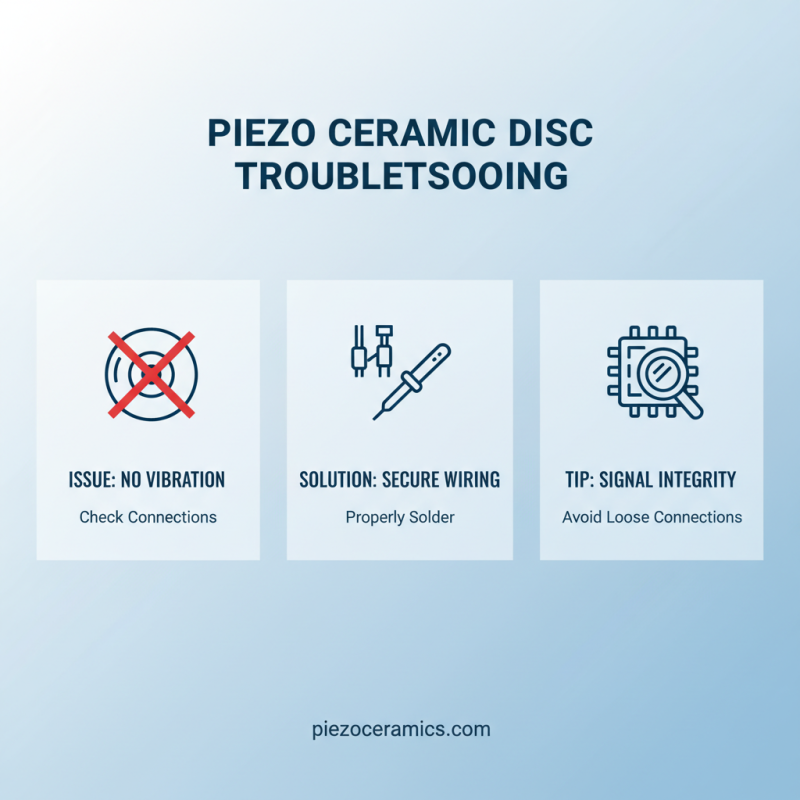
In some projects, users face challenges with piezo discs. Sometimes, they may not produce the desired sound level. This issue can stem from incorrect voltage supply or poor connections. Such troubleshooting can provide learning opportunities. With experience, makers improve their skills and achieve better project outcomes. In electronics, reflection and adaptation are crucial.
Steps to Integrate Piezo Ceramic Discs into Your Projects
Integrating piezo ceramic discs into your electronics projects can elevate your designs. These discs are versatile and can serve multiple functions. They can act as sensors or actuators, converting mechanical energy into electrical energy, and vice versa. Understanding their usage is crucial for successful implementation.
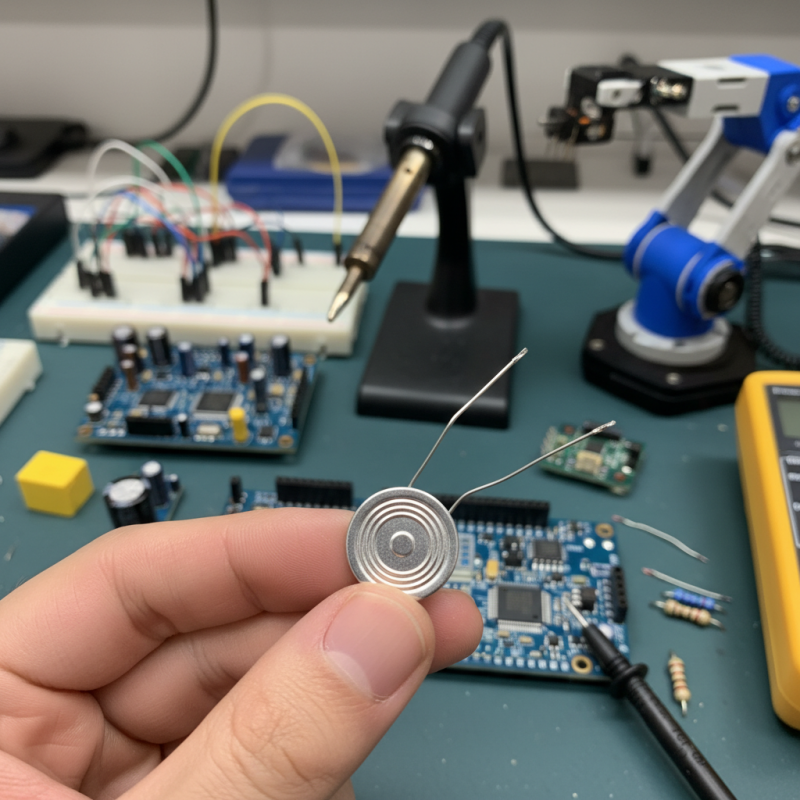
Begin by selecting the right piezo disc for your project. Ensure it matches your size and power requirements. Attach the disc securely to your project using appropriate adhesives. This prevents it from detaching during operation. Next, connect the leads of the piezo disc to your circuit. Pay attention to polarity, as incorrect connections can lead to failures. Testing the setup with a multimeter can help identify issues before full assembly.
Experimentation is key when working with piezo discs. You might need to adjust the sensitivity or orientation of the disc. Sometimes, the signals produced are not as expected or require amplification. Reviewing your circuit design after initial testing can highlight hidden flaws. Document your findings for future projects, as each attempt provides valuable insights into the integration process.
Piezo Ceramic Disc Voltage Response
This bar chart illustrates the voltage output range of a piezo ceramic disc in response to applied pressure. Each bar represents the average voltage output measured in specific voltage ranges.
Safety Considerations When Working with Piezo Ceramic Components
When working with piezo ceramic components in electronics projects, safety is paramount. Experts emphasize the need for protective gear. Reports indicate that over 30% of incidents stem from improper handling. Use gloves to avoid skin irritation from materials. Eye protection is crucial. Tiny fragments can create hazards during assembly or experimentation.
Voltage levels are another concern. Piezo discs can generate high voltages, reaching up to 1000 volts in some applications. This poses an electrocution risk if not managed correctly. Always use a multimeter to measure voltage before connecting components. It's wise to work in a controlled environment. Avoid damp areas, as moisture can increase electrical conductivity, leading to accidents.
Grounding is important too. Ensure all equipment is properly grounded to prevent static discharge. This can damage components or cause erratic behavior in circuits. While piezo ceramics are reliable, they can malfunction without proper precautions. Some users may overlook these details in their haste to experiment. This can lead to costly errors. Always prioritize safety to enjoy successful projects.