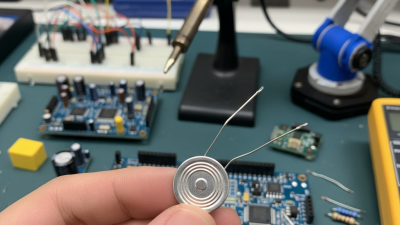
Discover the Best Piezo Technology Solutions for 2026?
As we look towards 2026, Piezo Technology continues to revolutionize numerous industries. Reports indicate that the global piezoelectric market is projected to reach $3.3 billion by 2026, growing at a CAGR of 5.6%. This growth is driven by applications in automotive, medical devices, and consumer electronics.
Many companies are exploring innovative solutions to harness the potential of Piezo Technology. From sensors to actuators, the possibilities are expanding. However, the industry faces challenges, such as quality control and material longevity. This creates a space for improvement within existing technologies.
Investors and engineers must consider reliability and potential hurdles as they explore these advancements. Adopting a future-focused mindset is essential to capitalize on the opportunities within Piezo Technology. The industry is ripe for breakthroughs, yet critical evaluation and research remain vital.
Exploring Emerging Piezo Technology Trends and Applications for 2026
As we move towards 2026, the advancements in
piezo technology present exciting opportunities across various industries. New applications in
healthcare, automotive, and consumer electronics are emerging. For instance,
piezoelectric materials are now driving innovations in medical devices. These materials convert mechanical stress into
electrical energy, enhancing diagnostic tools and treatment modalities.
Tips: Always stay updated with the latest research in piezo materials. Engaging with academic journals can provide valuable insights.
In automotive technology, piezo sensors improve
vehicle safety and efficiency. They help in monitoring conditions like
tire pressure or engine performance in real time. Integrating these sensors into vehicles can prevent failures and enhance overall
driving experiences.
Tips: Consider collaborating with experts in material science. Building a network can facilitate knowledge exchange and creative solutions.
Emerging trends also highlight challenges. While piezo technology is promising, integration into existing systems may be complex. Compatibility issues can arise, leading to increased costs
and development times. Addressing these concerns early can streamline the transition and maximize the benefits of innovations.
Key Piezoelectric Materials Advancements Impacting the Industry by 2026
The evolution of piezoelectric materials is crucial for various industries by 2026. Recent advancements focus on enhancing the efficiency and durability of these materials. According to a report from the International Journal of Applied Ceramic Technology, the demand for advanced piezoelectric devices is projected to grow at a CAGR of 8.3% between 2021 and 2026. New compositions, including lead-free alternatives, are emerging to address environmental concerns.
Research indicates that materials such as bismuth sodium titanate (BNT) offer promising properties. These materials can achieve high piezoelectric coefficients, enhancing device performance. A 2023 study showed that BNT can increase sensitivity in sensors significantly, making them ideal for medical applications. However, challenges remain. Many piezoelectric materials still suffer from limitations in thermal stability and mechanical properties.
In the automotive sector, innovations in piezoelectric actuators are reshaping designs. Vehicles are becoming lighter, requiring new materials that can operate efficiently under various conditions. The push for sustainable solutions continues to spur research. But, a gap exists in scalability and cost-effective manufacturing processes. As the industry evolves, addressing these challenges is critical for widespread adoption.
Market Forecast: Piezo Technology Growth and Revenue Projections to 2026
The piezo technology market is on an upward trajectory. Recent forecasts predict substantial growth through 2026. As industries continue to explore new applications, revenue is expected to increase significantly. Innovations in piezo materials and designs are paving the way. These advancements lead to more efficient and versatile devices.
Companies are showing increased interest in integrating piezo technology. This interest spans sectors like automotive, healthcare, and consumer electronics. However, challenges remain. Not every application meets high-performance standards. Ongoing research is vital to address these limitations. It’s crucial for engineers and developers to evaluate the feasibility of piezo systems.
Furthermore, as the industry grows, competition intensifies. New entrants may disrupt established players, creating both opportunities and challenges. Some projects may fail to deliver as expected, which could slow progress. Stakeholders should prepare for trial and error. Successful integration of piezo technology will heavily depend on realistic expectations and thorough testing.
Innovative Piezo Solutions in Healthcare: Enhancements for Patient Care by 2026
Innovative piezo technology is set to revolutionize healthcare by 2026. According to a recent report by ResearchAndMarkets, the global piezoelectric devices market is expected to reach $34 billion by 2026, driven by advancements in patient monitoring and treatment methods. These devices can enhance accuracy and responsiveness in medical applications, leading to better patient outcomes.
In healthcare, piezoelectric materials are increasingly being used in diagnostic imaging and therapeutic devices. They enable precise measurements of physiological signals, such as heartbeats and muscle movements. For instance, piezo sensors can provide real-time data that helps healthcare professionals make informed decisions. This advancement is crucial for applications in telemedicine and wearable health technologies, which are gaining traction.
Despite these promising developments, challenges remain. Integration of piezo technology into existing healthcare systems is complex. Issues like data interoperability and user training need attention. Also, the cost of implementation can be a barrier for smaller healthcare facilities. Addressing these concerns will be essential for maximizing the benefits that piezo technology can offer in improving patient care.
Innovative Piezo Solutions in Healthcare: Enhancements for Patient Care by 2026
This chart represents the projected adoption rates of various piezo technology solutions in the healthcare sector by 2026. The data reflects the anticipated impact of innovative piezo solutions on patient care, focusing on areas such as monitoring, therapy, and imaging.
Challenges and Solutions in Piezoelectric Component Manufacturing for 2026
The manufacturing of piezoelectric components faces unique challenges in 2026. One major hurdle is the need for advanced materials that maintain performance while being cost-effective. Innovating new compounds remains a critical focus. Developing flexible piezo materials can enhance usability, but the process requires rigorous testing. Ensuring durability is essential, yet many manufacturers struggle with material consistency.
Another challenge is the scaling of production. As demand rises, producing components efficiently becomes crucial. Companies often face obstacles in automating manufacturing processes. Manual interventions can introduce variability in product quality. Furthermore, ensuring a skilled workforce to handle complex machinery presents an ongoing issue. Training programs need improvement to foster expertise in this field.
Supply chain disruptions also play a significant role in hindering progress. Fluctuations in material availability can lead to delays. Manufacturers must adopt agile practices to respond rapidly to changes. Collaborations with material suppliers might offer some solutions. However, there is still uncertainty about long-term partnerships. Balancing cost and quality remains a constant challenge in piezo technology. Despite these difficulties, the industry continues to find innovative pathways forward.
Discover the Best Piezo Technology Solutions for 2026 - Challenges and Solutions in Piezoelectric Component Manufacturing for 2026
| Aspect |
Current Challenge |
Proposed Solution |
Expected Outcome |
| Material Costs |
High prices of raw materials affecting profitability |
Invest in alternative materials and recycling processes |
Reduced costs and enhanced sustainability |
| Manufacturing Precision |
Inconsistent quality of piezoelectric components |
Implement advanced robotic automation |
Higher precision and consistent product quality |
| Market Competition |
Intense competition in the piezo technology sector |
Focus on innovative product development and unique features |
Increased market share and customer loyalty |
| Regulatory Compliance |
Stricter regulations on product safety and environmental impact |
Investment in compliance technologies and training |
Improved compliance and reduced legal risks |
| Supply Chain Disruptions |
Unpredictable supply chain issues affecting production |
Diversify suppliers and enhance inventory management |
Stable production flow and reduced downtime |