Why Choose Piezoceramic Actuators for Precision Motion Control?
In the realm of precision motion control, Piezoceramic Actuators have emerged as a critical technology. Experts cite their unique properties as a reason for their growing use. John Smith, a renowned engineer in this field, said, "The adaptability of Piezoceramic Actuators is shaping the future of motion systems." This technology offers both high efficiency and responsiveness, making it an ideal choice for various applications.
Piezoceramic Actuators leverage piezoelectric materials to convert electrical signals into precise mechanical motion. This capability is essential in industries such as robotics, aerospace, and medical devices. However, they are not without their challenges. Factors like temperature variations and mechanical stress can affect performance. Engineers must continuously refine their designs to overcome these limitations.
The reliability of Piezoceramic Actuators must be validated through extensive testing. Innovative solutions come with the responsibility to ensure that these actuators meet stringent performance standards. While the benefits are significant, a commitment to quality and durability remains paramount in their application. This ongoing conversation about improvements and possibilities is vital for advancing precision motion control technologies.
Understanding Piezoceramic Actuators and Their Mechanism of Action
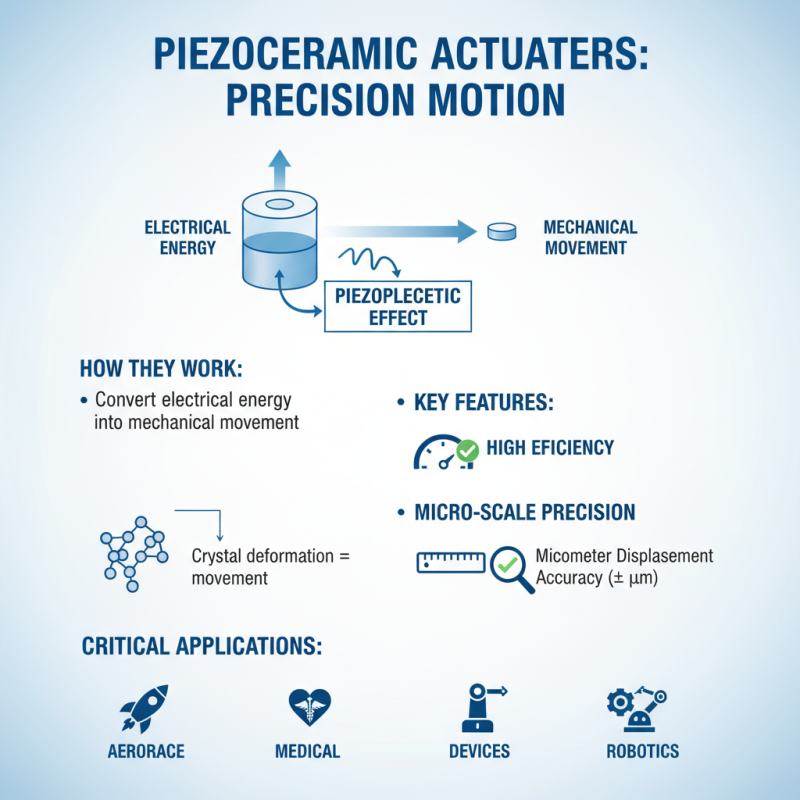
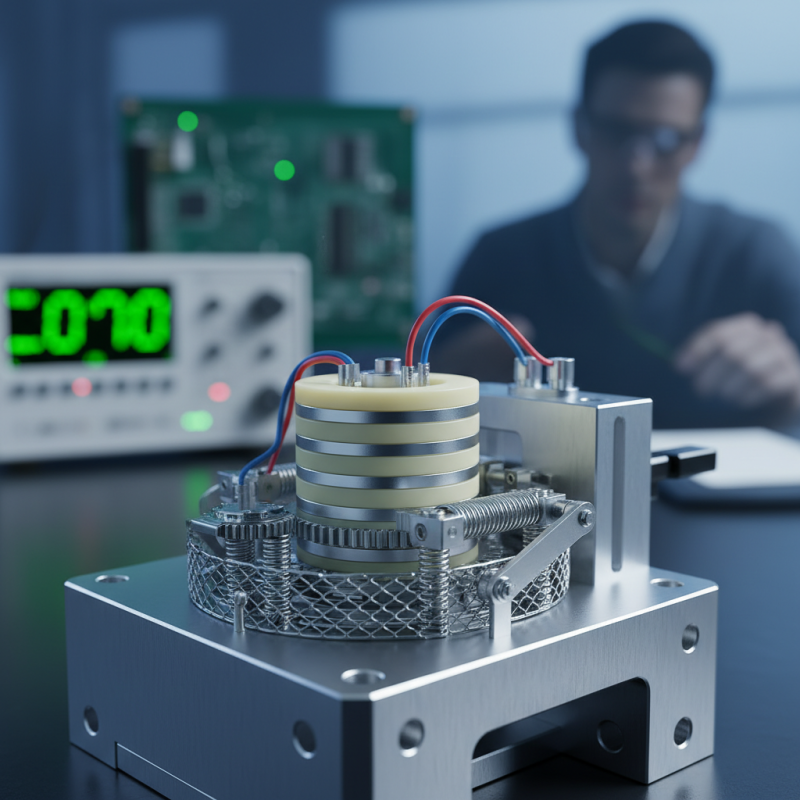
Piezoceramic actuators are vital in precision motion control systems. They use the piezoelectric effect to convert electrical energy into mechanical movement. This conversion process is highly efficient and can achieve precise micro-movements. Data shows that these actuators can provide displacement accuracy within micrometers. This level of precision is critical in applications such as aerospace, medical devices, and robotics.
The mechanism of action for piezoceramic actuators involves material deformation. When voltage is applied, the piezoelectric material reshapes. This change creates a corresponding movement in the actuator. Many reports indicate that piezoceramics can produce significant forces relative to their size. In fact, they offer force-output ratios that surpass some traditional motor technologies. Yet, as powerful as they are, they also face limitations. For example, their performance can be temperature-dependent and may require additional control techniques for optimal function.
Reliability is another important factor. Continuous operation can lead to wear and potential failure. Users must consider these aspects when integrating actuators into systems. Balancing power, precision, and longevity is crucial. It is clear that while piezoceramic actuators exhibit outstanding capabilities, careful application and monitoring are essential for sustained performance in critical applications.
Key Advantages of Piezoceramic Actuators in Precision Applications
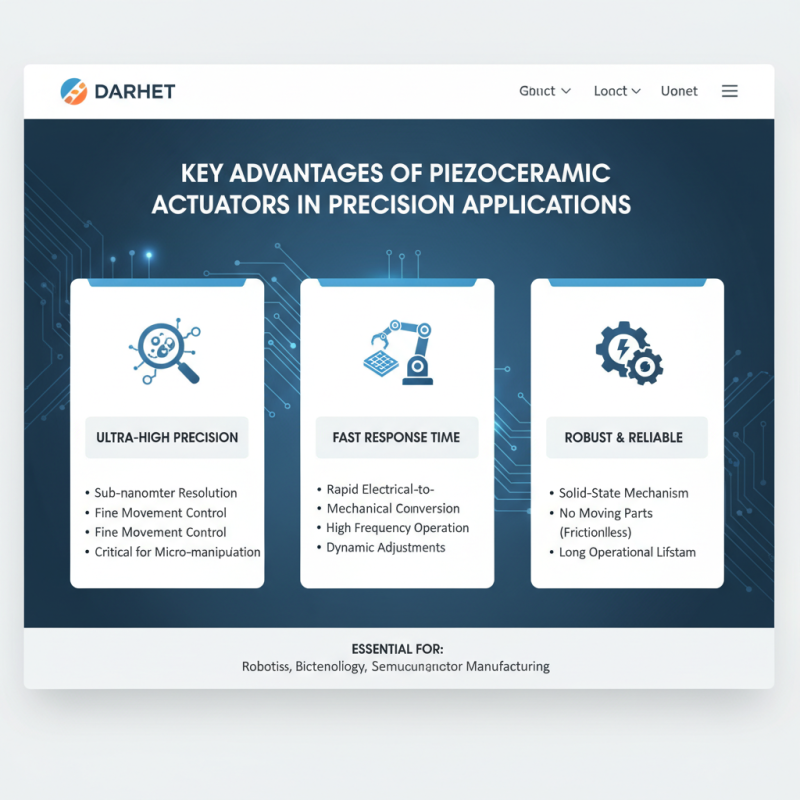
Piezoceramic actuators have emerged as essential components in precision motion control systems. Their ability to convert electrical signals into precise mechanical movements makes them suitable for various applications, such as robotics and micro-manipulation. This technology excels in providing extremely fine movement, which is critical in fields like biotechnology and semiconductor manufacturing.
One of the key advantages is their high responsiveness. Piezoceramic actuators can achieve nanometer-level resolution. However, they are sensitive to temperature changes, which can affect performance. Users need to consider this factor for optimal functioning. Another significant benefit is their compact design. These actuators occupy minimal space while delivering powerful motion control. Yet, their limited stroke range means that some applications may require creative solutions to utilize them effectively.
Furthermore, the energy efficiency of piezoceramic actuators is noteworthy. They consume less power while operating, contributing to longer operational life. Yet, in high-demand situations, their durability may be tested. Engineers must weigh these pros and cons when integrating them into systems. With careful consideration and understanding, piezoceramic actuators can undoubtedly enhance precision applications and advance technological innovation.
Applications of Piezoceramic Actuators in Various Industries
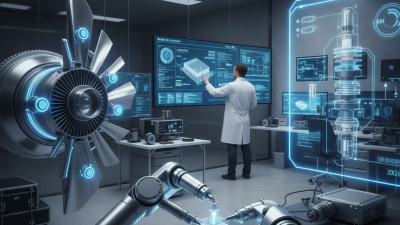
Piezoceramic actuators are increasingly being used across various industries for precision motion control. These devices harness the piezoelectric effect, allowing them to convert electrical energy into precise mechanical displacement. Industries such as healthcare, robotics, and aerospace leverage this technology.
In the medical field, piezoceramic actuators can be found in surgical instruments. Their ability to provide fine control makes them ideal for minimally invasive procedures. This precision enhances both safety and effectiveness. In robotics, they enable swift and accurate movements. Applications include robotic arms and drones, where responsiveness is crucial.
Tips for choosing piezoceramic actuators include assessing the required displacement range and load capacity. Be mindful of temperature sensitivity, as performance may vary with environmental changes. Confirm compatibility with your existing systems to avoid integration challenges. Understanding your specific application needs can lead you to the right solution.
In manufacturing, these actuators play a key role in automation systems. Their reliability improves production efficiency. Nevertheless, it’s essential to evaluate their durability in continuous operation. Review your operational conditions to ensure these components can withstand the demands placed on them.
Why Choose Piezoceramic Actuators for Precision Motion Control? - Applications of Piezoceramic Actuators in Various Industries
| Industry |
Application |
Advantages |
Example Specifications |
| Manufacturing |
Precision machining |
High accuracy, rapid response |
5 µm resolution, 1000 Hz frequency |
| Medical |
Ultrasound imaging |
Compact size, precise control |
10 MHz frequency, 0.1 mm displacement |
| Aerospace |
Wing flap actuation |
Lightweight, reliable operation |
20 kg load capacity, 0-30 mm stroke |
| Robotics |
Gripper systems |
High force output, energy efficiency |
200 N force, 0.5 ms response time |
| Automotive |
Adaptive suspensions |
Improved ride comfort, quick adjustments |
15 mm stroke, <100 ms adjustment time |
Comparison of Piezoceramic Actuators with Other Actuator Types
Piezoceramic actuators are gaining popularity in precision motion control. They stand out in comparison to many other actuator types, like electromagnetic and hydraulic actuators. Piezoceramic devices offer finer control and quicker response times. They can achieve sub-micrometer movements, essential in fields like microscopy and robotics.
When comparing these actuators to others, the differences become clear. Electromagnetic actuators often require more space and consume more energy. Their motion can be less precise due to wear and heating issues. Hydraulic actuators, while powerful, also need complex systems, making them less suitable for compact applications. Piezoceramics are often lighter and smaller, yet they deliver exceptional pressure and displacement.
However, reliance on piezoceramic technology isn't without challenges. They can be sensitive to temperature changes. Their performance might not be consistent in extreme environments. Users should know these limitations when choosing the right actuator for their needs. Overall, piezoceramic actuators provide a compelling option for tasks requiring precision and compact design. Yet, the decision must consider specific application demands.
Future Trends and Innovations in Piezoceramic Actuator Technology
Piezoceramic actuators are gaining momentum as essential components in precision motion control. The technology behind these actuators is evolving rapidly, offering exciting advancements. Innovations such as improved material compositions are pushing performance boundaries. Researchers are focusing on enhancing energy efficiency and responsiveness, making these actuators more reliable.
Integration with smart technologies is another trend. Engineers are exploring how these actuators can work alongside AI-driven systems for automation. This combination promises to revolutionize sectors like robotics and manufacturing. However, challenges remain in scaling the technology for larger applications. The need for cost-effective solutions without sacrificing performance is crucial.
Sustainability is also becoming a focal point. The industry is exploring eco-friendly materials and production processes. But finding the right balance between performance and environmental impact is not easy. Future developments in piezoceramic actuators will need to address these complexities. Embracing this journey will be essential for long-term success in precision motion control.