Leave Your Message



Choosing the right Piezo Fan in 2026 requires more than comparing airflow figures. A reliable decision begins with the application. Consider enclosure size, heat generation, operating voltage, acoustic limits, and available mounting space. A compact fan may cool a sensor enclosure effectively, yet struggle inside a sealed industrial cabinet.
Dr. Kenji Uchino, a leading piezoelectric technology researcher, explains, “Piezoelectricity is the coupling between mechanical and electrical energy.” This principle matters because a Piezo Fan converts electrical vibration into directed airflow without conventional rotating blades. The result can be quieter operation, lower mechanical wear, and a slimmer design. However, these benefits depend on correct installation. Measure airflow at the intended back pressure, not only in open air. Check sound levels near the actual user position. Examine frequency compatibility with nearby sensors and precision electronics.
Small details matter.
A practical evaluation should include thermal performance, power consumption, dust exposure, control method, and expected service life. Review test conditions carefully. Manufacturers may use different airflow standards, making direct comparisons imperfect. That is easy to overlook. It is also worth testing the fan inside the final enclosure, where grilles, cables, and narrow passages can reduce performance. No selection guide removes every compromise. A model with excellent cooling may produce an unacceptable tonal sound. Another may fit perfectly but lack sufficient pressure. This guide will examine those trade-offs, compare key specifications, and identify the Piezo Fan features that deserve closer attention before purchase.
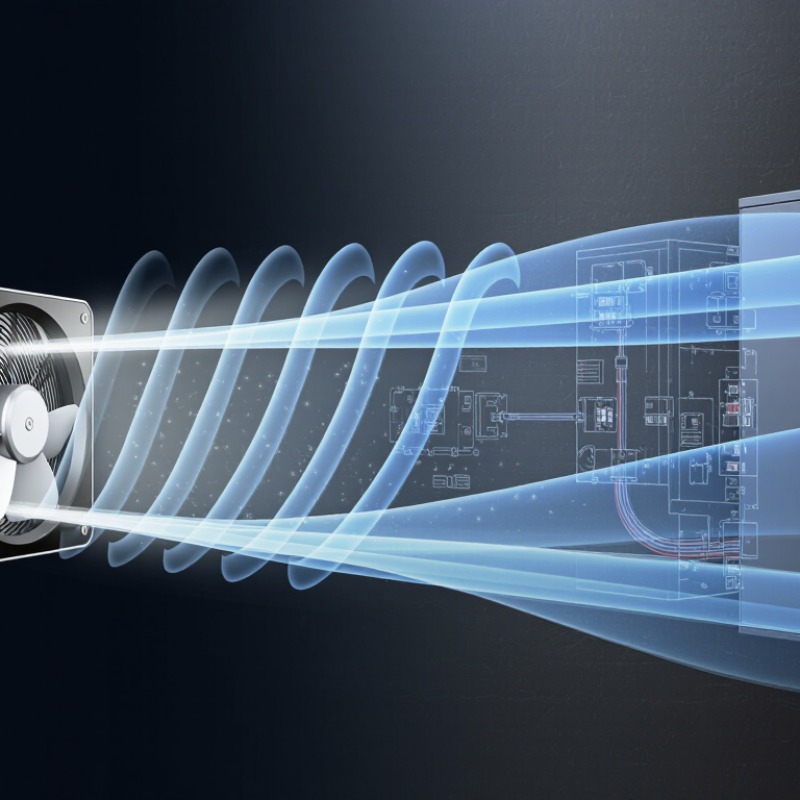
How to Choose the Best Piezo Fan in 2026?
What Is a Piezo Fan and How Does It Work?
A piezo fan uses the inverse piezoelectric effect to create airflow. An alternating voltage makes a thin ceramic element expand and contract. This movement bends a flexible metal strip attached to it. The strip then oscillates rapidly, pushing nearby air through a narrow channel. There are no rotating blades, bearings, or traditional motor parts.
The airflow feels like a soft, steady stream beside the vibrating strip. A piezo fan can fit into spaces barely wider than a few millimeters. It also produces little electromagnetic interference and usually consumes very little power. “Quiet” is not guaranteed. At certain frequencies, the strip may create a sharp buzzing sound. Mechanical mounting matters too; a loose frame can amplify vibration through the enclosure.
When choosing one in 2026, check airflow, static pressure, operating voltage, noise data, and thermal limits. Airflow alone can mislead you. A fan may move plenty of air in an open test but perform poorly against a tight filter or fin stack. Match the fan’s pressure rating to the real cooling path. Measure temperatures inside the finished device, not only on a workbench. Piezo fans suit compact electronics, sensors, and sealed enclosures, but they cannot replace high-pressure cooling in every application. I would also leave some design margin, because published acoustic and airflow values may change with installation.
| Selection Dimension | Typical Piezo Fan Data | What It Means | What to Check Before Buying |
|---|---|---|---|
| Operating Principle | A piezoelectric actuator bends when an alternating voltage is applied. The attached flexible blade oscillates and creates an air stream. | It produces airflow without a conventional motor, rotating hub, or fan bearings. | Choose this technology when compact size, low mechanical wear, and low electromagnetic interference are important. |
| Typical Operating Frequency | Approximately 100–300 Hz for many resonant bimorph designs. | The blade normally delivers its best airflow near its mechanical resonant frequency. | Use the specified drive frequency. Operating far from resonance can substantially reduce airflow and efficiency. |
| Drive Voltage | Common actuator drive levels are about 20–200 V peak-to-peak AC, depending on the piezo element and driver design. | Piezo fans often require a dedicated oscillator or high-voltage driver even when their input power is low. | Confirm input voltage, waveform, peak-to-peak voltage, and whether the driver is included. |
| Electrical Power | Typically about 0.1–2 W for small cooling assemblies; larger or higher-output designs may require more. | Low power consumption makes piezo fans suitable for compact electronics and battery-powered systems. | Compare measured input power at the required airflow, not only the nominal actuator rating. |
| Airflow Output | Often below 1 CFM for miniature units; some larger multi-blade designs can provide higher airflow. | Piezo fans are generally intended for localized cooling rather than replacing high-flow axial or centrifugal fans. | Match the airflow to the heat source and verify the test conditions, including distance, orientation, and back pressure. |
| Air Velocity Near the Blade | Approximately 1–3 m/s is common in the near-field region of small designs, but results vary by geometry and drive level. | The strongest cooling effect is usually close to the oscillating blade or heat sink surface. | Check airflow distribution and mounting distance rather than relying on free-air velocity alone. |
| Noise | Approximately 20–40 dBA for many small assemblies, depending on operating frequency, blade design, and mounting. | There is no rotating bearing noise, but aerodynamic and structural resonance noise can still occur. | Require an acoustic test value measured at a stated distance and operating condition. |
| Typical Size | Common small assemblies are approximately 20–60 mm long and 10–30 mm wide, with thickness often below 10 mm. | The slim form factor allows installation where a conventional fan and motor cannot fit. | Check the complete envelope, including the blade swing area, driver board, wiring, and required clearance. |
| Heat-Removal Capability | Best suited to localized cooling of heat sinks, LED modules, sensors, compact electronics, and enclosed hot spots. | The directed air stream can improve convection at a specific surface without moving a large volume of enclosure air. | Estimate the heat load and confirm the required temperature reduction through thermal testing. |
| Back Pressure Performance | Generally limited compared with pressure-oriented centrifugal blowers; performance decreases when airflow is obstructed. | Dense filters, narrow ducts, and tightly enclosed channels can significantly reduce cooling performance. | Ask for a pressure-flow curve or test the fan in the actual enclosure and airflow path. |
| Expected Service Life | The piezo element has no conventional rotating bearing; service life is mainly affected by blade fatigue, bonding, contamination, and driver conditions. | Fewer moving parts can reduce mechanical wear, but the flexible blade remains a critical fatigue component. | Review endurance-test conditions, operating temperature, vibration limits, and allowable continuous-duty time. |
| Operating Temperature | Many electronic assemblies are designed for approximately −20°C to 70°C, while the actual range depends on the piezo material, adhesive, and driver. | Temperature can change piezoelectric behavior, resonance, adhesive strength, and blade flexibility. | Select a unit whose rated temperature range exceeds the highest internal equipment temperature. |
| Electromagnetic Compatibility | The actuator has no commutated motor and normally generates less motor-related electromagnetic interference. | This can benefit sensitive measurement, optical, medical, and communication equipment. | Evaluate the driver circuit separately, because fast voltage transitions and wiring can still create electrical emissions. |
| Installation Requirements | Requires a rigid mounting point, adequate blade clearance, correct electrical polarity where specified, and a compatible resonant driver. | Poor mounting or contact with nearby parts can restrict oscillation and create excess noise or damage. | Check mounting orientation, clearance, connector type, driver compatibility, and protection from dust or liquid. |
| Best Application Fit | Compact electronics, localized heat sinks, optical systems, sensors, wearable devices, and low-airflow enclosures. | Piezo fans are strongest when space, low power, low wear, and targeted airflow matter more than maximum volume flow. | Use a conventional blower or axial fan when the application needs high airflow, high static pressure, or long ducting. |
Note: The numerical values are representative engineering ranges for small piezoelectric fan designs. Actual performance depends on blade geometry, resonant frequency, drive voltage, mounting method, ambient temperature, and measurement conditions.