What is Piezo Motion and How Does It Work in Modern Technology?
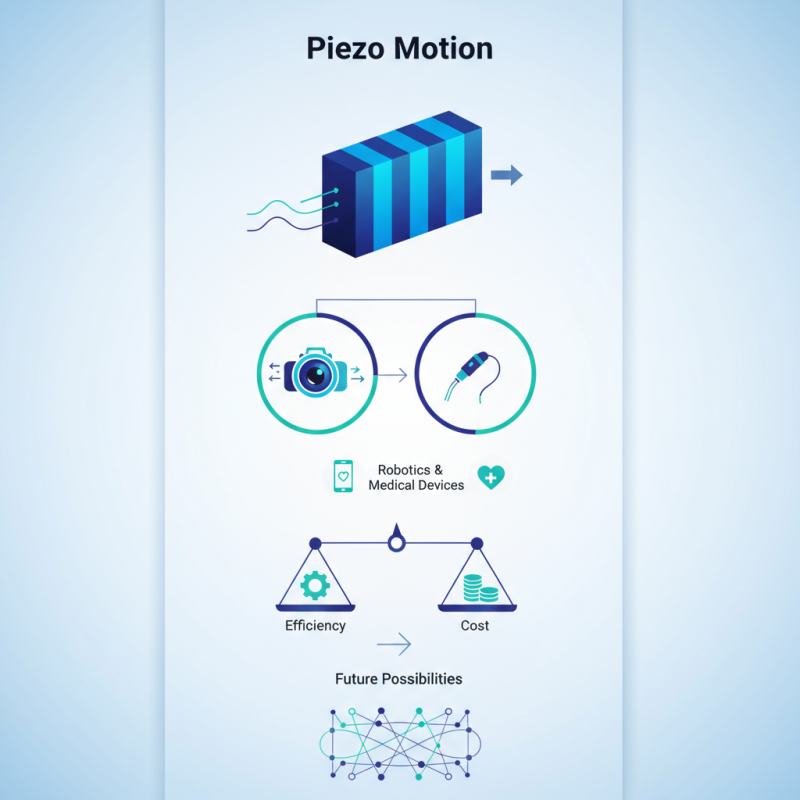
Piezo Motion is a transformative technology shaping various modern applications. It involves the use of piezoelectric materials that generate mechanical motion in response to electrical signals. Industry expert Dr. Emily Harris states, "Piezo Motion is revolutionizing precision engineering, creating new possibilities in robotics and medical devices."
This technology operates by adjusting the shape or size of the piezoelectric materials when voltage is applied. Devices like actuators and sensors leverage this effect to achieve fine movements. For example, piezoelectric actuators are found in smartphone cameras, enabling rapid focus adjustments.
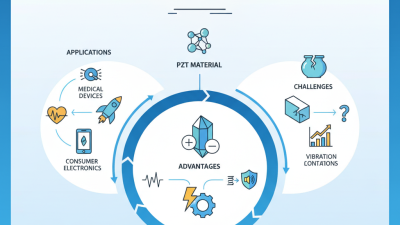
However, the field is still evolving. Challenges remain in maximizing efficiency and minimizing costs. It is crucial to understand these limitations as we explore new applications. Advancements in Piezo Motion could redefine industries, but we must approach these changes with critical thinking.
Overview of Piezo Motion Technology in Modern Applications
Piezo motion technology has gained significant traction in recent years, playing a crucial role in various modern applications. This technology utilizes piezoelectric materials that expand or contract when an electric field is applied. In medical devices, for example, piezo actuators enable precision movements for surgical instruments. A 2021 report by Allied Market Research highlighted that the piezoelectric sensor market is projected to reach $3.12 billion by 2026. This growth reflects increasing demand for accurate and reliable measurement systems in healthcare and industrial sectors.
Robotics is another field witnessing advancements due to piezo motion. The technology facilitates miniaturization and enhances the performance of robotic systems. Researchers at MIT noted that piezoelectric motors can provide efficient movement in small robots, allowing for intricate tasks in confined spaces. Yet, challenges remain. The sensitivity of piezo materials can lead to failures under high-stress conditions, necessitating the development of more robust designs. Hence, while piezo motion holds promise, further innovation is essential for optimal use.
Overview of Piezo Motion Technology in Modern Applications
Principles of Piezoelectric Effect and Material Characteristics
The piezoelectric effect is a fascinating phenomenon where certain materials generate an electric charge when mechanically stressed. This effect is achieved through the microscopic arrangement of atoms in the material. When deformed, the symmetric arrangement of charge distributions is disrupted, creating a voltage. Common piezoelectric materials include ceramics and certain crystals. Their unique characteristics allow them to respond quickly to external pressures.
In modern technology, the defining characteristics of piezoelectric materials enable them to be used in various applications. They are present in sensors, actuators, and precision instruments. The materials are valued for their high sensitivity and rapid response times. However, not all piezoelectric materials perform equally. Some may have limited durability under continuous stress. Others might experience fatigue, resulting in decreased efficiency over time. This variability in performance underscores the importance of selecting the right material for specific applications.
Understanding the underlying principles of the piezoelectric effect is crucial. Engineers and scientists continue to explore new materials to enhance performance. Ongoing research seeks to improve the reliability and efficiency of piezoelectric devices. This pursuit leads to innovations that could revolutionize areas like robotics and telecommunications. As knowledge expands, so too does the potential for more sophisticated and dependable piezoelectric technologies.
Key Applications of Piezo Motion in Robotics and Actuators
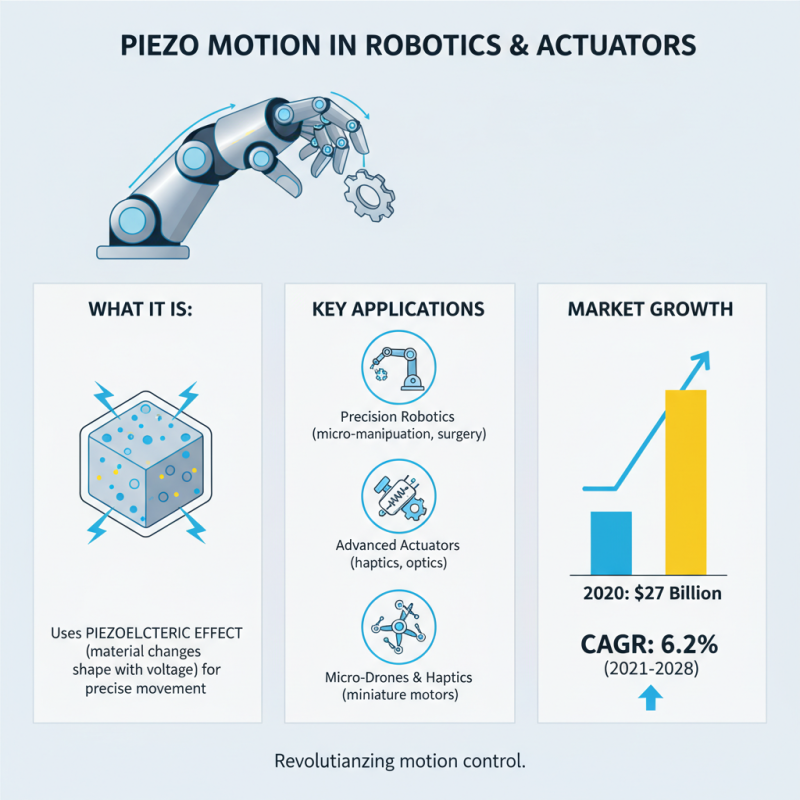
Piezo motion technology is revolutionizing the field of robotics and actuators. It leverages the piezoelectric effect, where certain materials change shape under electric voltage. This technology is crucial in creating precise movements in robotic systems. Studies indicate that the global piezoelectric devices market was valued at approximately $27 billion in 2020 and is projected to grow at a CAGR of 6.2% from 2021 to 2028. Such growth underscores the increasing reliance on this technology in various applications.
In robotics, piezo motion enhances accuracy. Robots equipped with piezoelectric actuators can perform tasks with high precision. For example, in surgical robots, these actuators allow movements within micrometers. Data suggests that piezo actuators can achieve positioning speeds of up to several meters per second. However, drawbacks exist. Piezoelectric materials often require careful calibration, which can be complex. In addition, their performance can be affected by temperature changes, leading to challenges in consistent applications.
The use of piezo motion in actuators also extends to industrial automation. Here, they improve responsiveness and energy efficiency. Many industries are witnessing shifts toward adopting smart actuators that utilize piezo technology. Reports have highlighted that automation could boost productivity by 20-25% in manufacturing sectors. Yet, integrating this technology can be daunting, as it necessitates skilled personnel for optimal utilization. Addressing these challenges is essential for maximizing the benefits of piezo motion in the modern landscape.
Market Growth and Economic Impact of Piezo Motion Technology
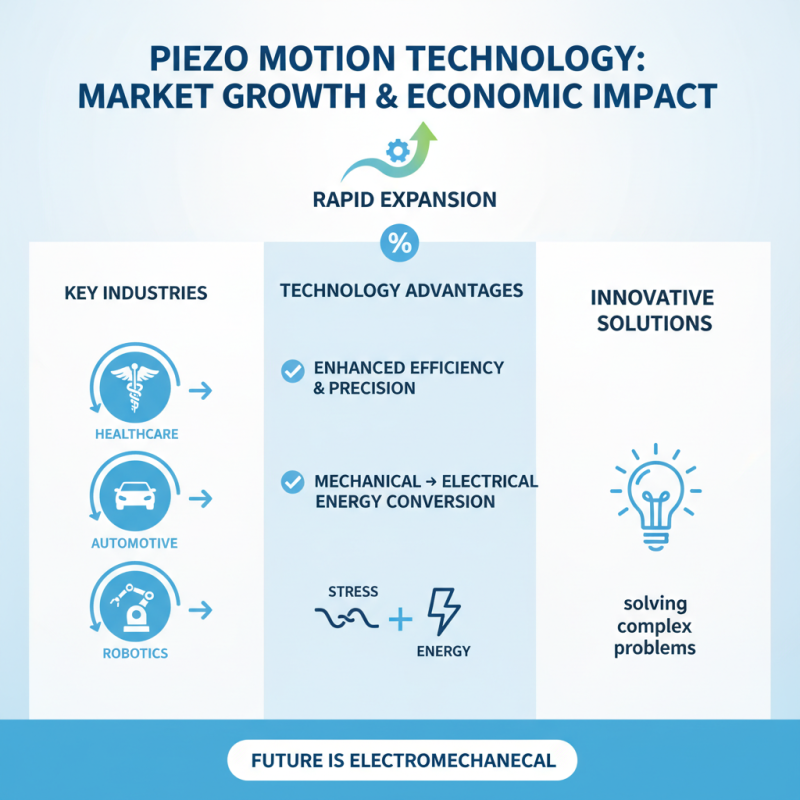
The growth of piezo motion technology has been significant in recent years. Market analysts estimate that this field is poised for rapid expansion. Industries such as healthcare, automotive, and robotics are key drivers of this growth. The adoption of piezoelectric materials enhances efficiency and precision in various applications. These materials convert mechanical stress into electrical energy, leading to innovative solutions for problems that were once difficult to tackle.
Economic impact is profound. Job creation in engineering and manufacturing fields has surged. Educational institutions are responding by developing specialized programs. However, challenges exist. The technology demands ongoing research to optimize performance. Some implementations may not deliver immediate benefits. Stakeholders must weigh costs against potential gains. As piezo motion technology evolves, adaptability will be crucial for participants in this dynamic market.
Future Trends and Innovations in Piezoelectric Devices and Systems
The landscape of piezoelectric devices is rapidly evolving. In recent years, the global piezoelectric devices market has been valued at approximately $30 billion and is expected to grow at a CAGR of 7% from 2021 to 2026. This growth signals an increased demand for precision actuators and sensors in various industries, from consumer electronics to automotive applications. Piezo technology is paving the way for innovation, primarily due to its compact size and efficiency.
Recent advancements include the development of high-performance piezoelectric materials that are lighter and more robust. Researchers are now focusing on optimizing energy harvesting capabilities. Devices that convert mechanical energy into electrical energy offer a sustainable solution for powering small electronics. In a study by the International Journal of Engineering Research, they noted that piezoelectric sensors could reduce energy consumption in smart homes by up to 20%.
Challenges remain, however. The reliability of piezo materials under extreme conditions must be assessed further. While prototypes show promise, long-term performance data is still needed. Continuous research is essential to ensure these devices can thrive in harsh environments, such as aerospace and deep-sea applications. The way forward involves not just innovation but also careful evaluation of existing challenges.
What is Piezo Motion and How Does It Work in Modern Technology?
| Application |
Technology Type |
Advantages |
Challenges |
Future Trends |
| Medical Devices |
Ultrasound Imaging |
High Precision |
Cost of production |
Miniaturization |
| Automotive |
Fuel Injection Systems |
Improved Fuel Efficiency |
Reliability in Harsh Conditions |
Integration with Electric Vehicles |
| Consumer Electronics |
Smartphones and Tablets |
Touch Sensitivity |
Durability |
Flexible Electronics |
| Industrial Automation |
Robotics |
High Responsiveness |
Complexity of Systems |
Collaborative Robots |