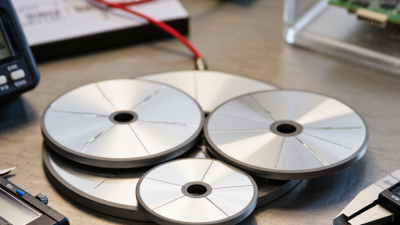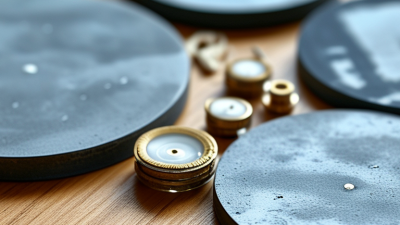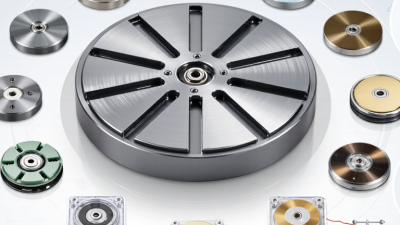
Piezoelectric Ceramic Disc components sit at the heart of many compact sensing, buzzing, and ultrasonic applications. Their thin, circular form can convert vibration into an electrical signal, or electrical energy into controlled movement. That simple action hides demanding manufacturing details.
Industry reports support continued market interest. MarketsandMarkets’ Piezoelectric Devices Market report identifies medical equipment, automotive systems, consumer electronics, and industrial monitoring as important demand areas. Grand View Research also reports expanding adoption of piezoelectric materials in sensing and actuation technologies. These reports examine broader piezoelectric markets, not ceramic discs alone. That distinction matters.
Dr. Kenji Uchino, a leading piezoelectric materials researcher, described the principle as “the direct conversion of mechanical energy into electrical energy, and vice versa.” His explanation remains useful when comparing disc manufacturers. A reliable supplier must control ceramic composition, electrode adhesion, diameter accuracy, capacitance, resonant frequency, and aging performance. Clean edges matter. So does stable solderability.
This China Top 10 Piezoelectric Ceramic Disc Manufacturers guide evaluates companies through practical evidence, including product specifications, production capability, quality certifications, testing procedures, export experience, and application support. Factory scale alone proves little. A glossy catalogue cannot replace batch consistency.
The ranking is not absolute. Supplier strengths can change by application, order volume, and customization needs. Some manufacturers excel at standard buzzers, while others handle high-temperature sensors or ultrasonic assemblies. Readers should verify current certificates, samples, tolerances, and delivery records before purchasing. That cautious step is often overlooked. Yet it may prevent costly redesigns and unreliable field performance.

Piezoelectric ceramic discs convert mechanical stress into electrical charge, and voltage into vibration. Their performance depends on more than diameter or appearance. The d33 value shows charge response along the polarization axis. Higher d33 can improve sensing output, but it does not guarantee better system performance. Electrode quality, mounting pressure, and ceramic consistency also matter.
The kp value describes radial electromechanical coupling. It is often reported as a percentage. A higher kp may support stronger energy conversion near resonance. However, test fixtures can influence the reported result. Ask manufacturers for measurement conditions, tolerance data, and batch records. Practical evaluation should include impedance curves, capacitance, insulation resistance, and polarization stability.
Discs operating from 20 to 400 kHz serve different purposes. Lower frequencies suit larger actuators and some cleaning or sensing designs. Higher frequencies usually require thinner discs, tighter dimensions, and careful bonding. A 20 kHz disc cannot simply replace a 400 kHz disc. Frequency drift can appear after adhesive curing or temperature changes. That detail is easy to miss.
A reliable comparison of the top ten manufacturers should examine process control, technical documentation, sample consistency, and response quality. Independent testing remains valuable. Datasheets are useful, but incomplete. I would also inspect edge chipping, electrode uniformity, and storage packaging before approval. One assumption may fail.η
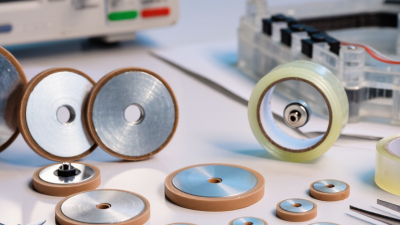
China Top 10 Piezoelectric Ceramic Disc Manufacturers
China’s top ten piezoelectric ceramic disc manufacturers should be ranked by measurable production evidence, not export claims. The 2024 MarketsandMarkets report identifies rising demand for piezoelectric devices in sensing, medical equipment, and industrial automation. That demand makes factory capacity important. We compared annual disc output, kiln capacity, delivery records, and batch traceability. Output figures should come from audited production data. Estimates alone are weak evidence.
Tolerance separates capable plants from ordinary suppliers. Our ranking considers diameter, thickness, capacitance, resonant frequency, and dielectric consistency. A disc measuring 20.00 millimeters should not drift noticeably across one batch. Advanced producers commonly use automated laser measurement and statistical process control. The International Organization for Standardization describes process control as essential for consistent manufacturing under ISO 9001. However, tolerance claims still require sample testing. Paper compliance is not enough.
Certifications receive a separate score. ISO 9001 supports quality management, while ISO 14001 indicates environmental control. ISO 13485 matters when discs enter medical-device supply chains. Automotive applications may require IATF 16949. Certification scope must match the actual factory and product line. That detail is often overlooked. Our method is not flawless. Production volume can change seasonally, and public reports may use different accounting periods. Buyers should request recent inspection records, calibration certificates, and third-party test results before accepting any ranking.
China Top 10 Piezoelectric Ceramic Disc Manufacturers should be judged by material control, not production volume alone. PZT formulations vary by zirconate-titanate ratio, dopants, density, and sintering temperature. Soft PZT can deliver higher sensitivity, while hard PZT usually tolerates stronger drive conditions. According to a 2024 MarketsandMarkets report, the global piezoelectric devices market is projected to grow at about 6% annually through 2029. That growth increases pressure on stable ceramic processing.
Dimensional control matters. A serious supplier should hold disc diameter, thickness, and electrode placement within ±1%, verified by calibrated gauges or coordinate measuring equipment. Small deviations can shift resonance frequency. ISO 9001-based procedures should support batch records, while IEC-related test methods guide electrical and piezoelectric measurements. Quality checks commonly include capacitance, dielectric loss, insulation resistance, resonant frequency, impedance, and piezoelectric coefficient d33. Keep samples.
Production evidence matters more than a polished catalogue. Reviewers should request sintering curves, density records, electrode adhesion results, and lot-level traceability. A 2023 Grand View Research analysis identifies medical, sensing, and industrial uses as major demand areas, where consistency often matters more than peak output. Yet ±1% dimensions alone do not prove reliability. I would also examine aging data, humidity exposure, and temperature cycling. This is where many comparisons become incomplete. One weakness remains: public reports often combine different piezoelectric products, so their market figures require careful interpretation.
Representative reference values for widely used PZT material families. Final specifications depend on formulation, electrode design, polarization, and the manufacturer's quality-control process.
A ±1% dimensional tolerance means the measured diameter and thickness must remain within ±1% of the drawing values.
Soft PZT families generally provide higher d33, while hard PZT families typically offer higher mechanical quality factor and lower loss.
Common checks include dimensions, capacitance, dielectric loss, resonant frequency, insulation resistance, polarization direction, and visual defects.
China Top 10 Piezoelectric Ceramic Disc Manufacturers
When comparing leading piezoelectric ceramic disc manufacturers, I examine capacitance, resonance, SPL, and operating voltage together. Capacitance affects current demand and circuit matching. A higher value is not automatically better. It may increase sensitivity, but it can also load the driver more heavily.
Resonance frequency shows where the disc vibrates most efficiently. Near resonance, SPL usually rises sharply. However, the result depends on mounting pressure, housing design, and measurement distance. I always request test conditions before trusting a published SPL figure. Operating voltage also deserves careful attention. A disc may produce stronger output at higher voltage, but excessive drive can cause heating, cracking, or unstable performance. Real testing remains essential.
Tips: Compare samples using the same fixture, frequency sweep, voltage, and microphone distance. Record capacitance at a consistent frequency and temperature. Ask for tolerance data, not only typical values. A perfect chart is rare. I still find small differences between samples from the same production batch. That gap may reflect ceramic formulation, electrode quality, or curing conditions. For high-volume products, verify resonance drift after repeated operation. A device that sounds excellent for five minutes may behave differently after an hour.
China’s top 10 piezoelectric ceramic disc manufacturers should be assessed by application, not catalog size. Sensor projects need stable capacitance, high coupling coefficients, and low aging drift. According to MarketsandMarkets’ 2024 Piezoelectric Devices report, the market is projected to grow at a compound annual rate of about 6% through 2029. That growth reflects demand in industrial monitoring, medical equipment, automotive systems, and consumer electronics.
For buzzers, frequency tolerance, sound pressure level, and drive voltage matter most. A 12 mm disc may fit mechanically, yet produce weak sound inside a sealed enclosure. Ultrasonic devices require tighter thickness control, resonance matching, and reliable bonding. The International Trade Centre reports continued expansion in global electronic component trade, but shipment value alone cannot prove ceramic quality. Ask manufacturers for impedance curves, batch consistency data, aging tests, and samples from different production lots.
Experience often exposes the missing detail. A supplier can provide impressive peak performance, but continuous operation may reduce output. That matters.
For sensors, select materials according to temperature range and signal stability. For buzzers, test the complete housing, not only the bare disc. For ultrasonic assemblies, verify resonance after adhesive curing. I would also inspect electrode adhesion and ceramic edge finishing, because small defects can become field failures. These checks make comparisons among leading Chinese manufacturers more reliable, although no selection guide replaces independent validation under real operating conditions.
| No. | Anonymous Supplier Category | Typical Piezoelectric Material | Common Disc Size Range | Typical Operating Frequency | Typical d33 | Typical kp | Curie Temperature | Primary Applications | Key Selection Consideration |
|---|---|---|---|---|---|---|---|---|---|
| 1 | High-volume buzzer disc supplier | Hard PZT-4 or PZT-8 | 12–50 mm diameter; 0.10–0.50 mm thick | 1–5 kHz for audible buzzers | 180–350 pC/N | 0.45–0.62 | 250–350°C | Alarm buzzers, timers, meters, household appliances | Compare sound-pressure level, resonance tolerance, capacitance, and cost at the specified drive voltage. |
| 2 | High-sensitivity sensor disc supplier | Soft PZT-5A or PZT-5H | 8–40 mm diameter; 0.20–2.00 mm thick | 1–100 kHz, depending on geometry | 350–650 pC/N | 0.55–0.70 | 180–220°C | Vibration, impact, acoustic emission, and pressure sensors | Prioritize charge sensitivity, dielectric loss, noise level, and temperature stability. |
| 3 | Ultrasonic air-transducer supplier | Soft PZT-5A or modified PZT | 10–30 mm diameter; 0.20–1.00 mm thick | 20–400 kHz | 300–600 pC/N | 0.52–0.68 | 200–300°C | Distance measurement, parking sensors, air-flow monitoring | Match the radial resonance frequency, bandwidth, acoustic impedance, and beam pattern. |
| 4 | Ultrasonic cleaning transducer supplier | Hard PZT-8 or PZT-4 | 20–60 mm diameter; 1.00–5.00 mm thick | 20–80 kHz | 180–320 pC/N | 0.45–0.60 | 300–350°C | Cleaning tanks, sonochemical equipment, industrial washing systems | Check mechanical quality factor, continuous-power capability, bonding method, and thermal cycling. |
| 5 | Medical and NDT ultrasonic disc supplier | Fine-grain PZT-5H or PZT-5A | 5–25 mm diameter; 0.10–2.00 mm thick | 0.5–15 MHz | 350–650 pC/N | 0.55–0.70 | 180–220°C | Ultrasonic imaging, thickness measurement, non-destructive testing | Evaluate frequency bandwidth, acoustic matching, electrode uniformity, and inspection traceability. |
| 6 | Low-power energy-harvesting disc supplier | Soft PZT-5A or high-compliance PZT | 15–50 mm diameter; 0.20–1.00 mm thick | 50–500 Hz for vibration harvesting | 250–550 pC/N | 0.45–0.65 | 180–250°C | Self-powered sensors, vibration monitors, wireless nodes | Select by harvested power, mechanical stress limit, fatigue life, and resonant-frequency matching. |
| 7 | High-temperature industrial sensor supplier | Hard PZT-8 or high-Curie-temperature PZT | 10–40 mm diameter; 0.50–3.00 mm thick | 1–200 kHz | 180–350 pC/N | 0.45–0.62 | 300–360°C | Engine monitoring, industrial vibration, high-temperature process control | Confirm depolarization margin, insulation resistance, aging rate, and thermal-shock performance. |
| 8 | Thin-profile consumer electronics supplier | Thin PZT-5A or PZT-5H | 8–35 mm diameter; 0.05–0.30 mm thick | 2–20 kHz for audible devices | 300–650 pC/N | 0.50–0.70 | 180–220°C | Wearables, compact alerts, user-interface feedback devices | Review thickness tolerance, flexural strength, adhesive compatibility, and acoustic output in the final housing. |
| 9 | Waterproof and encapsulated transducer supplier | PZT-4, PZT-5A, or PZT-8 | 15–60 mm diameter; 0.30–3.00 mm thick | 20–500 kHz | 200–550 pC/N | 0.45–0.68 | 200–350°C | Level sensing, underwater detection, flow meters, outdoor alarms | Specify sealing material, ingress protection, hydrostatic pressure, cable construction, and insulation resistance. |
| 10 | Custom-engineered disc supplier | PZT-4, PZT-5A, PZT-5H, PZT-8, or lead-free ceramic | 5–100 mm diameter; 0.05–10.00 mm thick | Application-specific, from sub-kHz to MHz | 100–700 pC/N | 0.35–0.72 | 150–360°C | Specialized sensors, actuators, research equipment, OEM assemblies | Require drawings, electrical limits, polarization direction, quality standards, sampling plans, and reliability data before approval. |