Choosing the right Piezo Motion product in 2026 requires more than comparing travel ranges or browsing attractive specifications. Engineers must connect application demands with real operating conditions, including load, speed, resolution, stiffness, heat, vibration, and available control hardware. A nanopositioning stage may appear ideal on paper, yet fail when cables introduce unwanted force or when the mounting surface lacks rigidity. Small details matter.
This guide examines how experienced designers evaluate piezo stages, actuators, scanners, and controllers for laboratory, semiconductor, optics, and medical technology applications. It considers closed-loop feedback, repeatability, hysteresis, settling time, environmental stability, and long-term reliability. It also explains why supplier documentation, application support, calibration data, and transparent performance limits deserve careful attention. Specifications are useful, but they are not the entire story.
Real projects rarely behave perfectly.
A product selected for exceptional resolution may offer insufficient travel. A fast actuator may create heat or demand a more complex controller. Budget pressure can also encourage compromises that become expensive during integration. These trade-offs require practical judgment, not marketing language. Readers should question whether published values reflect typical performance, peak performance, or carefully controlled testing. By comparing technical evidence with the actual motion profile, this article provides a clearer path toward dependable Piezo Motion selection in 2026. Some recommendations may need revision as technologies evolve, and that uncertainty should remain visible rather than hidden.
How to Choose Piezo Motion Products in 2026?
Define the Motion Requirements and Operating Conditions
Start with the movement, not the product catalog. Record travel, resolution, speed, force, duty cycle, and settling time. A 20-micrometer move means little without its required accuracy. For example, a 100-millimeter optical platform may need nanometer-level repeatability, while a dosing valve may need only fast, controlled pulses. Piezo motion is usually strongest in short travel, high stiffness, and fine positioning.
Keep the environment measurable. Note temperature, humidity, vibration, vacuum level, electrical noise, and available mounting space. The 2024 Piezoelectric Devices Market analysis by MarketsandMarkets projects continued growth through 2029, driven partly by precision automation and medical equipment. That growth does not remove engineering limits. Heat can shift preload. Cable motion can introduce noise. Nearby fans can disturb a nanometer-scale measurement.
Use test data, not optimistic assumptions. IEC 60068 environmental methods can guide vibration and temperature qualification. Request hysteresis curves, resonance data, blocking force, and lifetime results under similar loads. A driver rated for 100 volts may still fail in a poorly controlled thermal enclosure. I have seen specifications look excellent until the real fixture added compliance. Leave margin for wiring, mounting errors, and aging. Some requirements will change after testing. That is normal.
Define the Motion Requirements and Operating Conditions
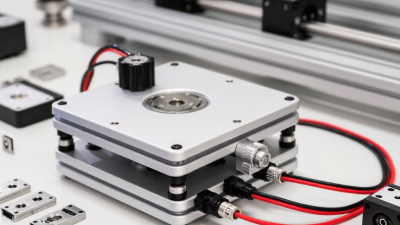
This representative open-loop response uses a 0–100 V drive range, approximately 100 μm nominal travel, and about 10% hysteresis. Actual displacement depends on actuator geometry, preload, temperature, load, drive electronics, and closed-loop feedback. Define travel, resolution, speed, load, voltage, temperature, and duty cycle before selecting a piezo motion product.
Choosing a piezo motion product starts with the movement you actually need. A stack actuator delivers strong force, but its stroke is usually short. A tube actuator can provide bending or fine positioning in several axes. Flexure-guided systems add stability and reduce unwanted rotation during travel.
Architecture matters as much as the piezo material. A bare actuator may suit a compact optical mount. A preloaded assembly is safer for repeated pushing and pulling. Check the guide mechanism, preload method, sensor location, and cable routing. Small details affect repeatability.
Look at the whole operating cycle. A high-voltage driver needs clean control, suitable insulation, and realistic heat management. Closed-loop feedback improves position accuracy, especially when temperature changes. However, sensors can add cost, noise, and mechanical complexity. More feedback is not always better.
In laboratory testing, I compare settling time, travel, force, and drift under the same load. Paper specifications rarely show the complete behavior. One design may move quickly but vibrate near resonance. Another may feel slower yet settle more cleanly.
Do not ignore installation limits. A stiff mounting surface can improve performance, while uneven clamping can distort motion. I once treated mounting as a minor detail. That assumption failed.
For 2026 projects, select the architecture that matches the motion profile, duty cycle, environment, and control strategy. Leave room for imperfect measurements. Real systems rarely behave like ideal diagrams.
How to Choose Piezo Motion Products in 2026?
Selecting piezo motion products requires more than checking nanometer resolution. Evaluate repeatability, travel range, stiffness, and operating frequency together. A stage may achieve impressive resolution but lack useful travel for your application. Check the unloaded and loaded performance separately. Real payloads change settling time, bandwidth, and positioning accuracy. Temperature drift also matters, especially during long imaging or inspection cycles.
Control features deserve equal attention. Look for closed-loop feedback, flexible trajectory control, and stable communication interfaces. A good controller should manage hysteresis and creep without demanding constant manual correction. Trigger inputs can synchronize motion with cameras, lasers, or measurement instruments. Safety limits, fault reporting, and recovery behavior reveal engineering maturity. I once focused too heavily on peak speed. The system looked excellent on paper, yet its settling behavior slowed the actual workflow. That mistake still influences my evaluations.
Tips: Create a test profile using your real payload, travel distance, and duty cycle. Measure settling time at several positions, not just the center. Ask for frequency-response data and thermal results under continuous operation. Check software documentation before accepting a polished demonstration. A clear interface saves time. Also, leave performance margin. Piezo systems can behave differently after installation, cable routing, or fixture changes. A specification is evidence, not a promise.
| Evaluation Dimension | Typical Data or Range | Why It Matters | Recommended Selection Check |
|---|---|---|---|
| Motion Architecture | Stack, tube, bender, flexure-guided stage, or piezo motor | The architecture determines travel, stiffness, speed, friction, and load capability. | Use direct-drive piezo actuators for compact nanometer motion; consider piezo motors when long travel and low standby power are priorities. |
| Travel Range | Approximately 10 µm to 1 mm for many strain-based actuators; millimeter-to-centimeter travel is possible with piezo motors. | Travel must cover the application stroke without operating continuously at the mechanical limit. | Select at least 10–20% additional travel when alignment tolerance, thermal drift, or assembly variation is expected. |
| Resolution | Open-loop resolution can be below 1 nm in favorable conditions; closed-loop systems commonly specify sub-nanometer to tens-of-nanometers resolution. | Resolution indicates the smallest commanded increment, not necessarily the true positioning accuracy. | Check command resolution, sensor resolution, electrical noise, and mechanical vibration separately. |
| Positioning Accuracy | Typically from tens of nanometers to several micrometers, depending on travel, calibration, sensor quality, and operating conditions. | Accuracy describes the difference between the commanded and actual position over a specified range. | Require a stated measurement method, travel range, load, temperature, and settling criterion. |
| Repeatability | Often sub-micrometer; closed-loop systems can achieve nanometer-scale bidirectional repeatability under controlled conditions. | Repeatability is critical for scanning, inspection, alignment, and automated process cycles. | Compare unidirectional and bidirectional repeatability, including hysteresis and backlash where applicable. |
| Operating Frequency | Mechanical resonance may range from hundreds of hertz to several kilohertz; usable closed-loop bandwidth is normally lower. | Higher bandwidth improves response time but can increase vibration sensitivity and control complexity. | Review both unloaded and loaded resonant frequency, as well as the controller’s closed-loop bandwidth. |
| Maximum Speed | Strain-based systems commonly provide millimeters per second or less; piezo motors can provide longer-travel motion at higher linear speeds. | Speed affects throughput, scan time, and the ability to follow dynamic trajectories. | Verify speed at the required load, stroke, acceleration, and positioning accuracy—not only the unloaded maximum. |
| Load Capacity | Small actuators may support grams to a few kilograms; guided stages can support higher loads depending on orientation and travel. | Load changes resonance, stroke, acceleration, settling time, and lifetime. | Include payload, cable forces, preload, gravity direction, and dynamic acceleration in the load calculation. |
| Drive Voltage and Current | Many piezo actuators use tens to several hundred volts; capacitive current increases with voltage, frequency, and capacitance. | The amplifier must supply sufficient voltage slew rate and current without excessive electrical noise. | Match amplifier output range, current capability, capacitance, polarity, insulation, and energy-recovery requirements. |
| Closed-Loop Feedback | Common sensors include capacitive, strain-gauge, and optical encoders; sensor ranges should cover the full commanded travel. | Feedback reduces hysteresis, creep, drift, and load-dependent positioning error. | Choose sensor technology according to required noise level, bandwidth, environmental stability, and integration space. |
| Control Mode | Open-loop voltage control, closed-loop position control, velocity control, trajectory control, and scanning modes. | The control mode determines ease of integration and achievable motion quality. | Prefer closed-loop control for repeatable positioning; use open-loop control only when cost, speed, or simplicity outweighs drift compensation. |
| Settling Time | Can range from sub-millisecond to tens of milliseconds, depending on travel, load, damping, controller tuning, and settling band. | Settling time directly affects cycle time and measurement throughput. | Compare settling time using the same move distance, load, final-error band, and measurement bandwidth. |
| Hysteresis and Creep | Open-loop piezo motion can exhibit significant voltage-position hysteresis and time-dependent creep; closed-loop feedback substantially reduces both. | These effects can cause position error after voltage changes or during long dwell periods. | Request creep curves, hysteresis data, and long-term drift data at the intended operating temperature. |
| Thermal Stability | Performance depends on actuator self-heating, ambient temperature, mounting structure, and sensor thermal behavior. | Temperature changes can alter displacement, preload, calibration, and resonant frequency. | Check operating temperature, temperature coefficient, warm-up behavior, and thermal management provisions. |
| Mechanical Guidance | Flexure guidance provides frictionless motion with no backlash; bearings and friction-drive mechanisms may support longer travel but introduce different error sources. | Guidance affects straightness, cross-axis error, stiffness, wear, and maintenance. | Evaluate angular error, off-axis load tolerance, stiffness, friction, and expected service life. |
| Communication and Integration | Common interfaces include analog command, USB, Ethernet, RS-232/RS-485, and industrial fieldbus options. | Interface compatibility affects synchronization, automation, diagnostics, and software development time. | Confirm command update rate, synchronization method, software support, API availability, and real-time requirements. |
| Protection and Reliability | Useful features include over-voltage protection, over-current protection, travel limits, position limits, emergency stop, and fault logging. | Protection reduces the risk of actuator damage, uncontrolled motion, and downtime. | Check endurance data, environmental rating, cable flex-life, mounting restrictions, and the availability of replaceable components. |
Note: The ranges above are general engineering reference values rather than specifications for a particular product. Actual performance should be verified using the supplier’s datasheet and test conditions.
Choosing a piezo motion product starts with integration, not peak resolution. In practical lab setups, cable length, controller timing, mounting surfaces, and software communication can decide performance. A stage may fit mechanically but fail when its connector conflicts with existing equipment. Check voltage ranges, feedback types, mounting patterns, and available control interfaces before ordering. Small mismatches create large delays.
Tips: Build a simple integration checklist. Confirm dimensions, connector standards, operating temperature, and command protocols. Test the product with your actual controller and load when possible. Do not rely only on catalog values. Real assemblies often behave differently. Leave space for cable movement and service access.
Compatibility also includes the working environment. Dust, vibration, heat, and repeated travel can affect positioning stability. Ask for repeatability data under conditions similar to your application. Review calibration methods, expected service life, and technical support procedures. Reliability should be verified through documented testing, not confident wording. Safety deserves equal attention. Use current protection, grounding, travel limits, and emergency shutdown controls. Piezo systems can respond quickly. That speed needs careful limits. A perfect specification sheet may still miss a practical weakness, so record test results and revise the selection before full deployment.
Choosing a piezo motion product starts with the supplier, not the catalog image. Experienced suppliers explain displacement, blocking force, resonance, hysteresis, and thermal drift clearly. Ask for recent test data, calibration records, material details, and application references. A reliable supplier should also describe quality controls and production traceability. Vague answers deserve caution. During discussions, notice whether engineers ask about load, travel range, operating frequency, and environmental conditions. That interaction often reveals more than a polished specification sheet.
Tips: Request a sample before placing a large order. Test it under your actual load, temperature range, and mounting method. Measure repeatability with suitable sensors, then compare results with the declared tolerance. Check response at low and high frequencies. Observe heating after extended operation. Keep every test condition documented. Small setup changes can alter performance significantly.
Validation should include static and dynamic measurements. Record displacement, settling time, electrical behavior, and long-term drift. Inspect cable connections and mounting surfaces after repeated cycles. I once underestimated fixture stiffness, which produced misleading motion data. The product was not the only variable. That mistake still matters. No test is perfect. Repeat critical measurements with another fixture or operator when possible. Review failures with the supplier and request corrective evidence, not only assurances. A strong final decision combines documented performance, responsive technical support, and realistic confidence in repeatable production.