Choosing the best Piezoceramic Actuator in 2026 depends less on a brand name than on the job it must perform. A nanopositioning stage needs fine, repeatable motion; a valve may prioritize force, speed, and reliable cycling. Stroke, preload, voltage, capacitance, hysteresis, and operating temperature all change the answer. Small details matter. A cable route or mounting surface can affect real-world performance.
Market research offers useful context, but not a ready-made winner. Grand View Research’s 2024 piezoelectric devices market analysis and MarketsandMarkets’ 2024 market forecast examine a wider sector spanning sensors, transducers, and actuators. Their market-level outlook can help explain investment and demand; it cannot confirm which actuator suits a particular design. For that, engineers should compare manufacturer datasheets and test results, including force–displacement behavior, resonance, thermal drift, and lifetime under the intended load. Specifications are not interchangeable. A quoted travel figure, for example, may assume a different voltage or preload.
This guide will assess actuator types and selection criteria against those practical constraints. It will also distinguish catalog performance from performance inside a real assembly. That distinction is easy to miss. Even a careful comparison can overlook mounting stiffness, heat, or control electronics. There is no universal best choice, and a tidy ranking may hide important trade-offs.
What Is the Best Piezoceramic Actuator in 2026?
What Is a Piezoceramic Actuator and How Does It Work?
A piezoceramic actuator is a device that turns an electrical signal into precise mechanical movement. Applying voltage creates an electric field inside the ceramic, causing it to expand or contract slightly. The motion is tiny. In a stacked actuator, many thin ceramic layers build this movement along one axis. A bending design instead curves as its layers deform differently. Both can respond quickly, without gears or sliding parts.
Small movement can still produce useful force. But performance depends on the design, electrical drive, and load. Piezo ceramics also show hysteresis: movement may differ slightly as voltage rises and falls. They can creep under a steady voltage, too. That matters. A controller may need feedback when repeatability is critical, rather than relying on voltage alone.
There is no single best actuator for every task in 2026. Match the required travel, force, response time, and available space to the application. Check operating voltage, preload requirements, and temperature limits before choosing. For a microscope stage, fine positioning may matter most; for a valve, force and duty cycle could matter more. It is easy to focus on advertised travel and overlook stability. That choice deserves a second look.
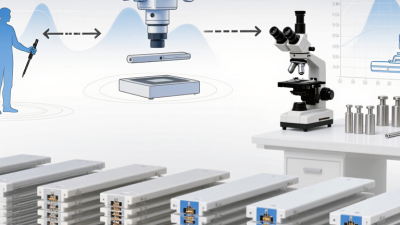
A piezoceramic actuator is not “best” in isolation; it is best matched to a specific load, motion range, and control system. Compare free stroke with the movement available under load, since a datasheet’s maximum displacement may not describe real operation. Check blocking force, too. A compact actuator may deliver useful force but only a few micrometers of travel. Small details matter.
Voltage range and capacitance affect driver choice, heat, and power demand. Hysteresis can make commanded motion differ from actual motion, while creep may shift position during a steady hold. For precision work, ask whether the actuator needs a position sensor or closed-loop control. These features add cost and complexity, but open-loop positioning can drift more than expected.
Also compare resonance frequency, preload requirements, temperature limits, and mounting conditions. A higher resonance may support faster motion, yet the attached stage can lower the system’s usable bandwidth. Test the actuator in its actual fixture, with representative cabling and load. I would not rank models from peak stroke alone; repeatability, settling time, and long-term stability often matter more. That trade-off deserves a test.
Key Performance Factor: Typical piezoelectric charge coefficient (d33) by ceramic grade
Higher d33 indicates greater charge response per unit force, but does not alone determine actuator performance. These approximate representative nominal values can vary by formulation and supplier; stroke, force, operating temperature, preload, and stability also matter when selecting an actuator.
What Is the Best Piezoceramic Actuator in 2026?
Common Piezoceramic Actuator Designs and Their Applications
In 2026, the best piezoceramic actuator depends on the motion, load, and control needs. These devices turn electrical input into precise mechanical movement. Their travel is often small, but their response can be fast. Small motion. High force.
Stack actuators use layers of piezoceramic material to produce greater displacement than a single layer. They suit precision stages in microscopy, optics, and semiconductor inspection, where tiny position changes matter. Bimorph or bending actuators curve when their layers expand differently. They are useful in small valves, pumps, and lightweight positioning mechanisms. Tube actuators can move in several directions, making them practical for fine alignment and scanning. Shear designs create sideways motion and can serve in compact positioning systems.
Each design has trade-offs. A stack may need careful preload and thermal management; a bender typically offers more travel but less force. Not always. Piezoelectric actuators can also show hysteresis and creep, so open-loop voltage control may not deliver repeatable positioning. Feedback sensors help, though they add cost and complexity. I would compare force, travel, response time, and operating conditions before choosing; published peak displacement alone can be misleading. A realistic test under the intended load often reveals more than a datasheet.
| Actuator Design | Typical Motion | Force and Stiffness | Drive and Control Considerations | Common Applications | Main Advantages | Key Limitations | Best Fit When… |
|---|---|---|---|---|---|---|---|
| Multilayer stack | Very small axial travel, commonly in the micrometer range; travel depends on stack length and construction. | High blocking force and high stiffness relative to its compact size. | Designed for comparatively low operating voltages, often tens to around 150 V. Requires a driver capable of supplying and recovering capacitive current. | Precision positioning, valve and injector control, vibration compensation, active optics, and nanopositioning. | Compact, fast response, high stiffness, and fine displacement control. | Limited free stroke; preload and careful mechanical mounting are often needed. Motion is affected by hysteresis and creep. | High force and precise, short-range motion matter more than large travel. |
| Amplified stack | Greater travel than a bare stack, typically in the tens to hundreds of micrometers depending on the amplification mechanism and load. | Moderate to high output force; amplification trades some force and stiffness for travel. | Uses a piezoceramic stack with a flexure or other mechanical amplifier. A suitable driver and attention to capacitive load are still required. | Optical positioning, precision stages, micro-manipulation, and compact active adjustment systems. | Combines stack stiffness with increased usable travel in a compact package. | More complex mechanics; output travel, force, and bandwidth depend on the amplifier design and attached load. | A bare stack does not provide enough travel, but a compact and responsive actuator is still needed. |
| Bimorph or bender | Bending motion, often producing comparatively large tip deflection, from micrometers to millimeters depending on size and loading. | Generally lower output force and stiffness than a stack actuator. | Often driven with a voltage across the ceramic layers; exact voltage and wiring depend on whether the structure is bimorph, unimorph, or multilayer. | Micro-pumps, shutters, small valves, audible or ultrasonic devices, and lightweight positioning mechanisms. | Large deflection from a simple, lightweight structure. | Tip motion can be sensitive to mounting and load; force is limited, and bending structures can be vulnerable to mechanical damage. | Large deflection is more important than high force or high axial stiffness. |
| Piezoelectric tube | Small axial, radial, or bending motion, depending on electrode layout and drive pattern. | Typically suited to light loads; force and stiffness vary substantially with tube dimensions and support. | Multiple electrode sections may be driven independently for coordinated motion. Electrical insulation and cross-axis effects require consideration. | Scanning probe microscopes, optical-fiber alignment, fine beam steering, and compact multi-axis positioning. | Can provide several motion axes in a compact cylindrical form. | Small travel, geometry-dependent behavior, and possible coupling between motion axes. | Compact multi-axis motion or a tubular scanning geometry is needed. |
| Shear actuator | Small lateral displacement in the direction of the applied shear field. | Can deliver useful force for its size, but usable travel remains small and depends on the element geometry. | Electrode arrangement and polarization direction are important; the actuator must be mounted to avoid unwanted tensile or bending stress. | Fast fine positioning, optical alignment, lateral scanning, and precision adjustment mechanisms. | Direct lateral motion and a compact form factor. | Limited stroke; mounting and load alignment are important for reliable operation. | The required motion is lateral and a small, precise displacement is sufficient. |
| Inchworm or walking actuator | Incremental motion over a comparatively long range, created by coordinated clamping and stepping elements. | Can support substantial loads and maintain position through its clamping mechanism; performance depends on the specific design. | Needs a coordinated multi-channel drive sequence and control electronics; motion is stepwise rather than a single smooth stroke. | Long-range precision stages, instrument positioning, and applications needing fine motion over a larger working range. | Combines piezoelectric precision with travel beyond the free stroke of a single stack. | More complex control and mechanical construction; speed, step size, and holding behavior are design-dependent. | Long travel and fine positioning are both required, and a more complex drive system is acceptable. |
Selection note: There is no universally best piezoceramic actuator. Actual stroke, force, voltage, bandwidth, and lifetime depend on the actuator’s dimensions, material, preload, mounting, temperature, and drive conditions. Use manufacturer specifications and application testing to confirm a design for a particular load and duty cycle.
The best piezoceramic actuator in 2026 is the one that fits your motion, load, and control needs—not simply the one with the largest rated stroke. Define the required travel first. A positioning task needing 8 micrometres calls for a different actuator than one needing 80. Small differences matter.
Check force under the actual load, not only the unloaded displacement shown on a specification sheet. Confirm drive voltage, capacitance, and amplifier limits together; a high-capacitance actuator may demand more current at fast operating speeds. For repeatable positioning, consider a built-in sensor and closed-loop controller. Open-loop operation can be simpler, but hysteresis and creep may shift the endpoint over time.
Then examine how the actuator will be mounted and used. Preload, heat, vibration, and cable routing can affect performance. In a lab setup, a rigid mount and short leads may be easy; inside a compact instrument, they may not be. Ask for measured stroke, blocking force, and response data under conditions close to yours. Datasheets do not always make comparisons straightforward. That part takes patience. Leave some margin for tolerances, and test a sample in the real fixture when possible. A neat spreadsheet can still miss a loose bracket or a warm enclosure.
In 2026, the best piezoceramic actuator depends on the motion, force, and space your application requires. Several designs deserve consideration.
A multilayer stack actuator suits applications needing high force and very small, precise movement, such as positioning a lens or moving a probe. Its travel is limited, so a flexure or mechanical amplifier may be needed.
Tiny travel. High force.
A bender or bimorph offers greater displacement with lower force, making it useful for valves, shutters, or lightweight scanning mechanisms. Mounting matters: a rigid clamp can restrict movement or create stress.
Tube actuators provide radial or axial motion and can support compact focusing and scanning systems. Flextensional designs use a mechanical shell to amplify displacement, though the added structure can affect stiffness and response.
Compare more than headline stroke. Check operating voltage, preload requirements, capacitance, bandwidth, hysteresis, and temperature sensitivity.
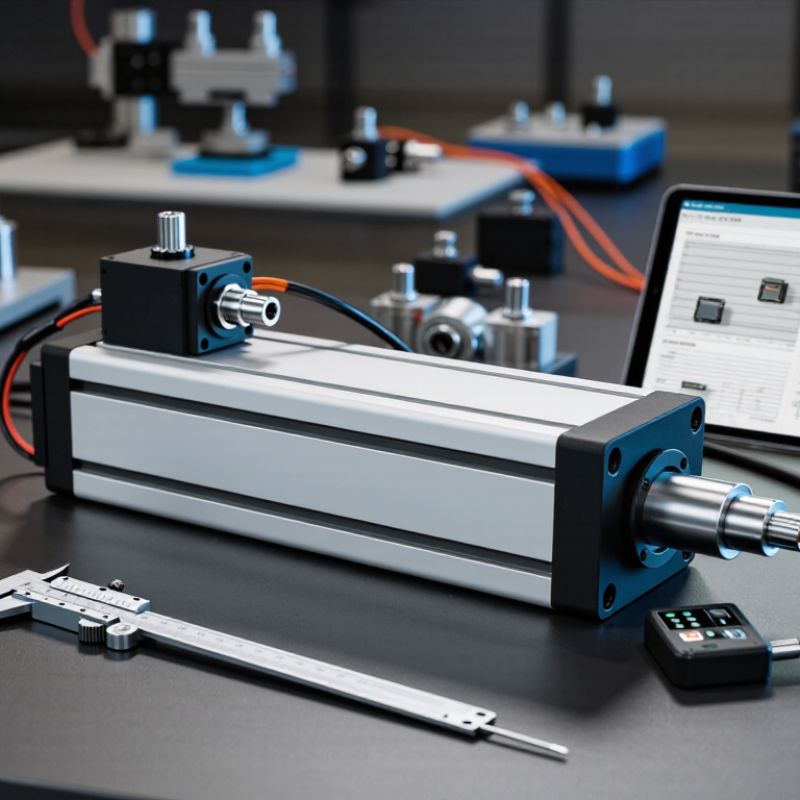
In a benchtop setup, even a small change in cable routing or mounting pressure can shift measured performance. That trade-off is easy to underestimate.
Ask for test conditions and verify results in your own assembly; published figures may not reflect your load or operating temperature. A careful comparison still leaves some uncertainty, especially when real mounting conditions differ from the test fixture.